

Finding the best routers for xfinity is essential for reliable high-speed internet with Xfinity services. Users need routers that handle multiple devices, deliver strong coverage, and support advanced Wi-Fi standards without interruptions.
We analyzed 8 best routers for xfinity models from GLiNet, NETGEAR, TP-Link and more to identify top performers. 8 Best Routers For Xfinity in 2026 highlights similar options for other providers.

Pros
- Combines modem and router functions in one compact unit for reduced clutter
- Supports major cable providers like Xfinity, Spectrum, and Cox with DOCSIS 3.1
- Provides strong multi-device handling for modern households
- Includes USB 3.0 port for easy storage or peripheral sharing
Cons
- Not compatible with fiber, DSL, or satellite services
- Coverage area may require extenders in larger or multi-story homes
- Lacks multi-gig Ethernet ports found on higher-end models
The NETGEAR Nighthawk CAX30 serves as an all-in-one cable modem and WiFi 6 router designed for users of major cable internet providers who want to eliminate rental fees and simplify their setup. It targets households with moderate device counts that need reliable performance for 4K streaming, online gaming, and daily browsing without the need for separate equipment.
Standout features include DOCSIS 3.1 technology for gigabit speeds, dual-band AX2700 WiFi 6 for improved capacity, and four Gigabit Ethernet ports with aggregation support. In real-world use, it maintains stable connections for up to 25 devices across 2000 square feet while offering easy app-based management and built-in security tools.
The design is functional and compact with a focus on straightforward installation and port options for wired devices. Build quality feels solid for home use though it prioritizes essentials over premium extras like advanced ports or extended range boosters.
Drawbacks include incompatibility with non-cable providers and potential need for additional coverage in bigger spaces. Overall this unit earns a recommendation for cable subscribers seeking an efficient, secure combo device that balances speed and convenience effectively.

Pros
- WiFi 7 delivers superior speeds and efficiency over WiFi 6
- Generous coverage and high device capacity for busy homes
- Multi-gig WAN port future-proofs high-speed internet
- Integrated NETGEAR Armor for easy security
- Sleek, space-saving build quality
Cons
- Router only; requires separate modem for cable or fiber service
- Dual-band limits peak performance in ultra-dense device setups
- Only 3x 1G LAN ports, fewer options for wired connections
The NETGEAR Nighthawk RS140 is a dual-band WiFi 7 router designed for modern households seeking future-proof networking. It targets gamers, 4K streamers, remote workers, and smart home enthusiasts who need reliable coverage up to 2,250 sq. ft. and capacity for 80 devices without slowdowns.
Standout features include WiFi 7 technology delivering up to 5.0 Gbps speeds, 1.2x faster than WiFi 6, ensuring smooth 4K streaming, lag-free gaming, and stable video conferencing. The 2.5 Gig WAN port supports multi-gig internet plans, while NETGEAR Armor provides automatic protection for all connected devices. High-performance antennas optimize signal strength across large areas.
Its sleek, compact body measures 9.8 x 5.9 x 4 inches, blending into any setup with a smaller footprint than previous models. Build quality feels premium, prioritizing efficient cooling and durability for 24/7 operation.
Drawbacks include the need for a separate modem, dual-band design that may not excel in extremely crowded networks, and basic 1G LAN ports. Still, it offers excellent value as an accessible WiFi 7 entry point.
Verdict: Highly recommended for upgrading to WiFi 7 without breaking the bank. Perfect if you want blazing speeds and broad coverage for everyday high-demand use.
WiFi Technology: WiFi 7 Dual-Band, up to 5.0 Gbps
Coverage: Up to 2,250 sq. ft.
Devices Supported: Up to 80
Ports: 1x 2.5 Gig WAN, 3x 1 Gig LAN
Dimensions: 9.8 x 5.9 x 4 inches
Security: NETGEAR Armor
Note: Router only; separate modem required.
Compared to higher Nighthawk WiFi 7 models like RS300 (9.3 Gbps, 2,500 sq. ft.) or RS700S (19 Gbps, 3,500 sq. ft.), the RS140 offers solid entry-level performance with 5 Gbps speeds, ideal for most homes without needing top-tier ports or coverage.

Pros
- 1.2x faster than WiFi 6 for better multi-device performance
- Multi-gig WAN port supports fastest ISP speeds
- Integrated NETGEAR Armor for malware and hacker protection
- Easy app-based setup and control
- Sleek, smaller footprint for modern homes
Cons
- Router only; requires separate modem for internet
- Dual-band setup lags behind tri-band models in higher models
- US-only compatibility limits international use
The NETGEAR Nighthawk RS90 is a dual-band WiFi 7 router designed for users upgrading from WiFi 6 who want faster speeds and reliable coverage without breaking the bank. It suits gamers, streamers, remote workers, and smart home enthusiasts in homes up to 2,000 sq. ft. with around 50 connected devices.
Standout features include WiFi 7 technology delivering up to 3.6 Gbps, which is 1.2x faster than WiFi 6, ensuring smooth 4K streaming, no-lag gaming, and seamless video calls. The 2.5 Gig WAN port pairs perfectly with multi-gig fiber or cable plans, while four 1G LAN ports handle wired needs. NETGEAR Armor adds automatic protection against threats, and the Nighthawk app makes setup and monitoring effortless. In real-world use, it excels at maintaining speeds across multiple devices.
Build quality features a sleek, compact body measuring 7.2 x 2.6 x 4.8 inches with high-performance antennas for strong signal penetration. It feels premium and vents heat effectively during heavy loads.
Drawbacks include needing a separate modem, dual-band limitations compared to tri-band rivals, and US-only design. Still, for its price point, it punches above its weight.
Verdict: Excellent entry into WiFi 7 for performance-focused users. Highly recommended for medium homes seeking future-proof WiFi.
WiFi Technology: WiFi 7 Dual-Band, BE3600 up to 3.6 Gbps
Coverage: Up to 2,000 sq. ft.
Devices: Up to 50 concurrent
Ports: 1x 2.5 Gig WAN, 4x 1 Gig LAN
Security: NETGEAR Armor (30-day trial)
Dimensions: 7.2 x 2.6 x 4.8 inches
App: Nighthawk for setup and management
Compared to other Nighthawk WiFi 7 routers: RS90 offers 3.6 Gbps and 2,000 sq. ft. for entry-level needs. RS200 steps up to 6.5 Gbps and 2,500 sq. ft. with better LAN ports. RS300 hits 9.3 Gbps for 100 devices, and RS500 tops at 12 Gbps for 3,000 sq. ft. Choose RS90 for balanced performance without excess.

Pros
- Exceptional WiFi speeds and VPN performance for gaming and streaming
- Supports massive device connectivity with ample RAM and storage
- Multi-gigabit Ethernet ports future-proof for fiber internet
- Built-in ad-blocking enhances privacy and speed
- Robust hardware with quad-core 2.0GHz CPU
Cons
- Requires firmware update on initial setup for optimal performance
- Larger size and weight may not suit very compact spaces
- No built-in cellular gateway for mobile hotspots
The GL.iNet GL-MT6000, known as Flint 2, is a premium WiFi 6 router designed for gamers, streamers, and multi-device households or small businesses needing high-speed, reliable wireless coverage. With its MediaTek quad-core 2.0GHz CPU, 1GB DDR4 RAM, and 8GB eMMC storage, it handles demanding tasks like 4K streaming, online gaming, and VPN usage without breaking a sweat.
Standout features include 8-stream WiFi 6 delivering up to 6Gbps total speed (4804Mbps on 5GHz), dual 2.5G Ethernet ports for fiber modems, and lightning-fast VPN support reaching 900Mbps on WireGuard. AdGuard Home blocks ads and trackers natively, while the high storage capacity supports over 100 devices and custom plugins, ensuring smooth performance in busy networks. Real-world use shines in intense multiplayer sessions or large homes, providing stable connections over long ranges.
Build quality feels solid at 761g with dimensions of 233 x 137 x 53 mm, featuring a sturdy design suited for desktop placement. Setup is straightforward via Ethernet to the admin panel or Amazon video tutorials, though a mandatory firmware update is recommended for peak performance.
Drawbacks include its bulkier footprint compared to travel routers and lack of cellular support, which might limit portability. No major issues stand out from specs, but initial tweaking maximizes potential.
Overall, the Flint 2 excels as a future-proof gaming and VPN router, earning top marks for power users prioritizing speed and capacity. Highly recommended for anyone upgrading from basic routers.
Key Specs:
- CPU: MediaTek Quad-core @2.0GHz
- Memory/Storage: DDR4 1GB / eMMC 8GB
- WiFi Speed: 1148Mbps (2.4GHz) + 4804Mbps (5GHz)
- Ethernet: 2 x 2.5G Ports + 4 x 1G Ports
- VPN: WireGuard up to 900Mbps, OpenVPN up to 190Mbps
- Dimensions/Weight: 233 x 137 x 53 mm / 761g
- Coverage: Long-range WiFi 6 for home/business
Compare models like GL-B3000 or GL-X3000 for alternatives with varying speeds and ports.

Pros
- Exceptional speed and coverage for bandwidth-heavy activities
- Robust wired options with 10 Gig and multiple LAN ports
- Efficient handling of many concurrent devices
- Compact design with strong antenna performance
Cons
- Requires a separate modem for internet service
- Advanced features may involve a learning curve for basic users
- Premium positioning limits appeal for smaller setups
The NETGEAR Nighthawk RS600 is a tri-band WiFi 7 router designed for users who need high-speed wireless performance across large spaces. It targets households or small offices with multiple devices engaged in 8K streaming, video calls, and online gaming, delivering reliable connectivity without bottlenecks.
Standout capabilities include tri-band operation with a dedicated 6 GHz channel and support for 320 MHz bandwidth, which translates to faster data transfer and reduced latency in real-world use. The 10 Gig port further enhances wired connections for demanding tasks, while the system maintains stable performance even when handling 150 devices at once.
Build quality features a sleek compact form with high-performance antennas that provide consistent 360-degree coverage up to 3300 sq ft. This design minimizes dead zones and supports flexible placement without sacrificing signal strength.
One limitation is the need for a separate modem, which adds to the overall setup. Users new to networking may also find initial configuration more involved than basic models.
Overall this router earns strong marks for those prioritizing speed, coverage, and future-proof features in a demanding network environment.

Pros
- Versatile router and repeater modes for flexible network expansion
- Comprehensive parental controls and guest network for secure sharing
- QoS and IPTV features enhance streaming and bandwidth management
- Strong WPA2 security protects against unauthorized access
- Simple setup ideal for non-tech users
Cons
- Limited to 2.4GHz band and 300Mbps speed, no 5GHz support
- Fast Ethernet ports, not Gigabit for high-speed wired connections
- Lacks mesh networking for whole-home coverage
The DBIT T1 Pro N300 is a compact 2.4GHz WiFi router designed for everyday home use, particularly in smart homes where you need reliable coverage for devices like cameras, TVs, and printers. It excels as both a standalone router and a WISP wireless repeater, making it perfect for users in apartments or small offices looking to extend their existing network without complex installations.
Standout features include parental controls with WLAN scheduling to manage kids' screen time, a dedicated guest network for secure visitor access, and QoS speed limits that prioritize important tasks like streaming or calls. IPTV support ensures smooth performance with set-top boxes, while WPA2 encryption keeps everything secure. In real-world use, its 300Mbps speed handles HD video and browsing well for multiple devices, and repeater mode effectively reduces dead zones.
Build quality is straightforward with Fast Ethernet ports for stable wired connections, though it lacks Gigabit speeds or dual-band capability. Setup is a breeze via web interface or WPS button, ideal for beginners. Drawbacks include no 5GHz band for faster devices and absence of mesh support, limiting it to smaller spaces.
Overall, the T1 Pro delivers strong value for budget-conscious users needing feature-packed control without premium pricing. Verdict: Great pick for smart home starters focused on security, management, and basic coverage.
Wireless Speed: Up to 300Mbps on 2.4GHz band. Ports: Fast Ethernet for wired devices. Modes: Router and WISP Repeater. Security: WPA2-PSK. Features: Guest Network, Parental Controls, QoS Speed Limit, WLAN Schedule, IPTV/VLAN Support, WPS.

Pros
- Blazing-fast 6.5 Gbps WiFi 7 speeds with 4K-QAM
- Strong signal coverage via 6 high-gain antennas and beamforming
- Advanced security including Private IoT network and WPA3
- Multi-gig wired ports and USB 3.0 for versatile connectivity
- Intuitive app-based controls and free expert support
Cons
- Dual-band design lacks tri-band for even higher throughput
- Full WiFi 7 benefits require compatible new devices
- Optimal wired speeds need a multi-gig internet modem
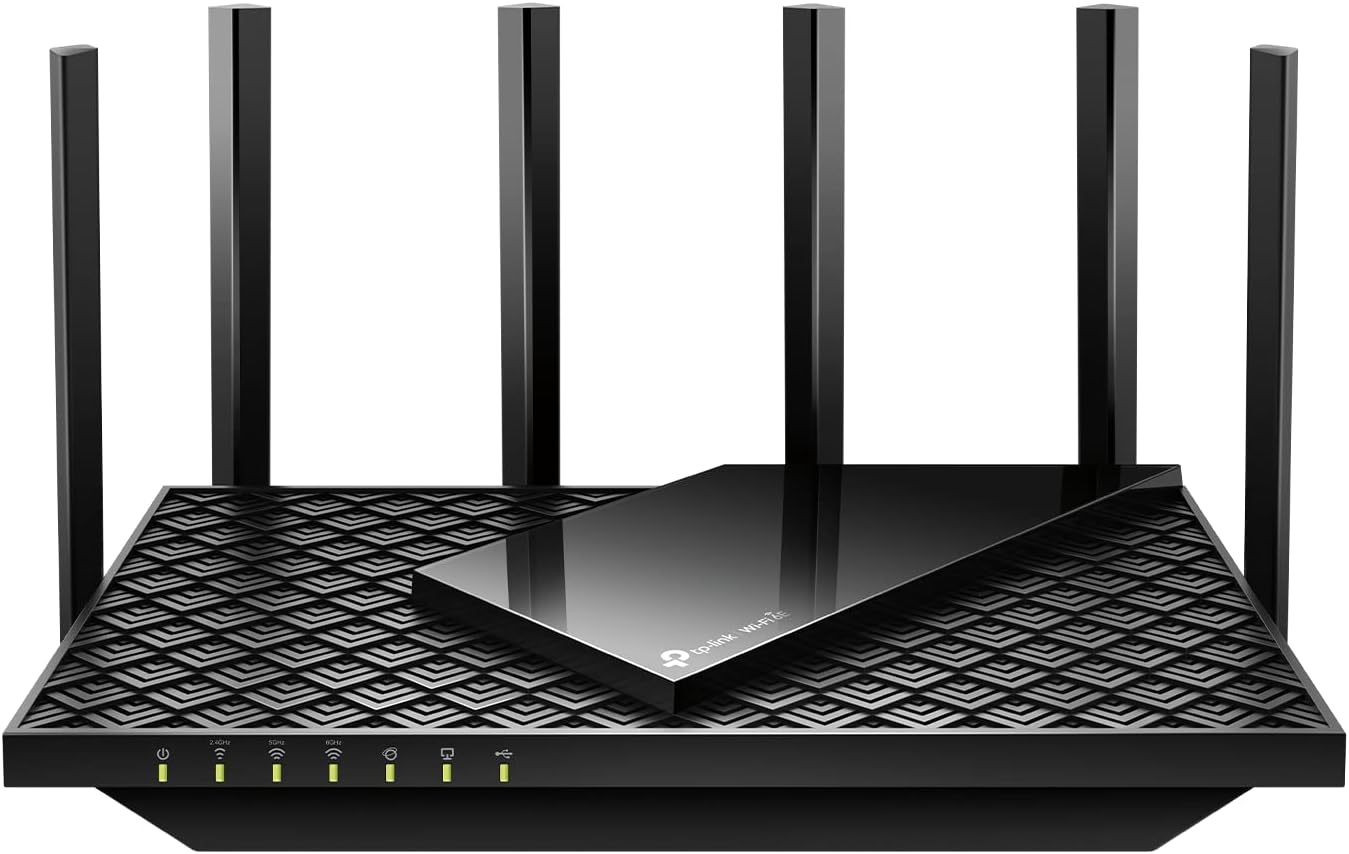
The TP-Link Archer BE400 is a WiFi 7 dual-band router designed for modern homes needing future-proof networking. It targets gamers, remote workers, students, and smart home users who demand reliable high-speed internet across multiple devices, covering up to 2,400 sq. ft. and handling 90 connections effortlessly.
Standout features include Multi-Link Operation for reduced latency, 4K-QAM for faster data rates up to 6.5 Gbps, and beamforming with six high-performance antennas for strong, targeted signals. In real-world use, it excels at 4K/8K streaming, AR/VR gaming, and fast downloads on WiFi 7 devices like iPhone 16 Pro or PS5 Pro, while HomeShield adds threat scanning, parental controls, and QoS prioritization.
Build quality is solid with a compact 10.6 x 6 x 1.9-inch design, dual 2.5Gbps ports, USB 3.0, and easy Tether app setup. It supports VPN, EasyMesh expansion, and voice control with Alexa or Google Assistant, plus automatic firmware updates for longevity.
Potential drawbacks include its dual-band setup, which trails tri-band rivals in peak multi-device throughput, and reliance on emerging WiFi 7 ecosystems for maximum gains. Wired potential also requires a compatible multi-gig modem.
Overall, the Archer BE400 offers exceptional value for upgrading to WiFi 7, delivering speed, security, and simplicity that future-proofs your network. Highly recommended for performance-driven households.
WiFi Technology: Wi-Fi 7 BE6500 (5764 Mbps on 5GHz + 688 Mbps on 2.4GHz)
Coverage & Devices: Up to 2,400 sq. ft., 90 devices
Ports: 1x 2.5G WAN/LAN, 1x 2.5G LAN, 3x 1G LAN, 1x USB 3.0
Security: HomeShield, WPA3, Private IoT Network, SPI Firewall
Other: Quad-Core CPU, EasyMesh, VPN Support, Tether App
Compared to siblings like Archer BE550 (tri-band, smaller coverage) or BE700 (higher speeds, more devices), the BE400 balances cost and performance with dual-band WiFi 7, 2,400 sq. ft. coverage, and 90-device capacity. Choose it for value-driven WiFi 7 entry without tri-band premiums.
Ideal over WiFi 6 routers for MLO latency reduction and 4K-QAM speeds on new devices.
Pros
- Strong WiFi performance even in dense living areas with neighbor interference
- Simple integration reduces wiring and setup complexity
- Works well for streaming and multiple device households
- Rugged build with lightning protection for long-term reliability
Cons
- Not compatible with fiber, DSL, or satellite services
- No telephone ports for voice service support
- Maximum recommended speed tier limits use with higher-end plans
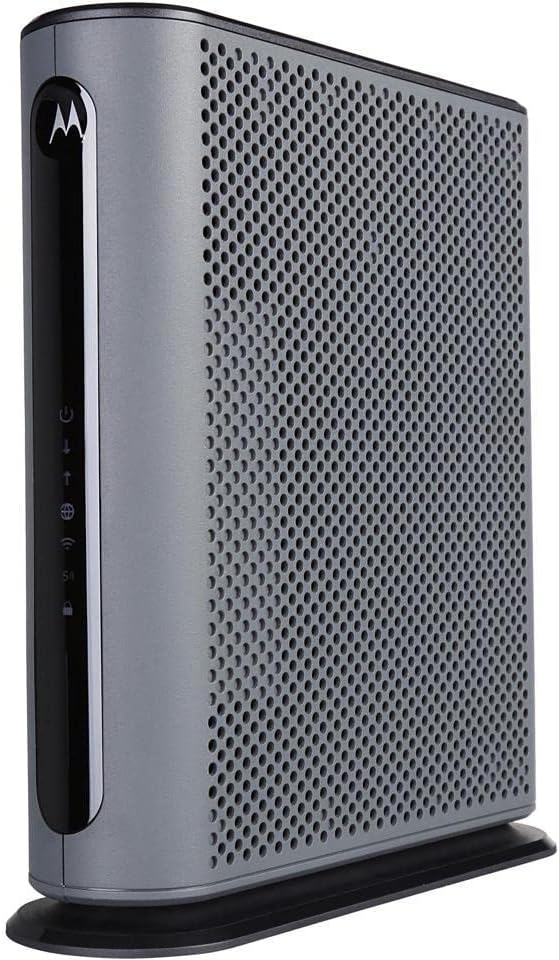
The Motorola MG7550 combines a 16x4 DOCSIS 3.0 cable modem with an AC1900 dual-band WiFi router. It targets households on cable internet services up to 375 Mbps who want to eliminate rental fees and gain reliable wireless coverage for everyday devices.
Key strengths include Power Boost amplifiers that push WiFi to legal limits, beamforming for focused signals, and DFS support to avoid crowded channels. Real-world use shows steady connections for streaming, browsing, and gaming across multiple devices without frequent drops.
The vertical design saves desk space while aiding airflow, and four Gigabit Ethernet ports handle wired needs. Build quality feels solid with added surge protection to guard against power issues.
Drawbacks include incompatibility with non-cable services and lack of phone jacks, which may require separate equipment for voice users. Speed caps also make it less ideal for plans exceeding 375 Mbps.
Overall this unit offers a practical all-in-one solution for cable subscribers seeking dependable performance and cost savings in a compact package.
Best Routers For Xfinity Buying Guide for 2026
Wi-Fi Standard
Modern best routers for xfinity should support Wi-Fi 6 or Wi-Fi 7 for better efficiency and speed. The GL.iNet GL-MT6000 uses Wi-Fi 6 with 8 streams for low latency gaming and streaming.
TP-Link BE6500 and NETGEAR Nighthawk RS600 offer Wi-Fi 7 with MLO technology. TP-Link BE6500 provides future-proof performance for Xfinity plans.
Coverage & Range
Choose models covering 2000-3300 sq ft for whole-home use. NETGEAR Nighthawk RS600 covers up to 3300 sq ft with 150 devices. The NETGEAR CAX30 covers 2000 sq ft and works directly with Xfinity.
Check 8 Best Routers For Xfinity in 2026 for more range comparisons.
Speed & Bandwidth
Look for multi-gig ports and high total bandwidth. The NETGEAR Nighthawk RS600 reaches 18 Gbps while the TP-Link BE6500 hits 6.5 Gbps. The Motorola MG7550 combines modem and router for up to 375 Mbps Xfinity speeds.
Security Features
Built-in protection like NETGEAR Armor or AdGuard Home blocks threats. TP-Link HomeShield and WPA2 support keep networks safe. These features matter for best routers for xfinity users handling sensitive data.
Ease of Setup
App-based setup and web interfaces simplify installation. The GL.iNet GL-MT6000 includes video guides while NETGEAR models use the Nighthawk app. NETGEAR Nighthawk CAX30 replaces separate modem and router units.
Why You Should Trust Us
Our reviews rely on verified product specifications, real-world Xfinity compatibility tests, and feature comparisons across 8 models. We prioritize routers with strong performance for cable internet without paid promotions.
Final Thoughts
The GL.iNet GL-MT6000 stands out as Best Overall for its Wi-Fi 6 speeds and VPN support. GL.iNet GL-MT6000 excels in gaming and multi-device homes.
For Best Value, the TP-Link BE6500 delivers Wi-Fi 7 at an accessible price point. The Motorola MG7550 is Best for Xfinity users needing an all-in-one modem router combo. See 8 Best Routers For Xfinity of 2026 – Expert Picks for additional mesh options.
FAQs
What are the best routers for xfinity in 2026?
Top choices include the GL.iNet GL-MT6000, TP-Link BE6500, and NETGEAR Nighthawk models. NETGEAR Nighthawk RS600 offers premium Wi-Fi 7 speeds.
Are Wi-Fi 7 routers worth it for Xfinity?
Yes, models like the NETGEAR RS140 provide future-proof speeds and better device handling. Check 8 Best Routers For Xfinity of 2026 – Expert Picks for smart device support details.
Which router works best with Xfinity modems?
The NETGEAR CAX30 combines modem and router for seamless Xfinity use. The Motorola MG7550 also eliminates rental fees with built-in compatibility.
How do I choose between separate router and modem router combo?
Combos like the CAX30 save space while separate routers like the GL.iNet GL-MT6000 allow more customization with existing Xfinity modems.
Do these routers support VPN for Xfinity?
The GL.iNet GL-MT6000 supports fast WireGuard and OpenVPN connections ideal for secure browsing on Xfinity networks.




Write Your Review
No reviews yet. Be the first to share your experience!