

Finding the best routers for spectrum internet is essential for seamless streaming, gaming, and smart home connectivity in 2026. With 10 top models from TP-Link, GLiNet, NETGEAR and more, users can achieve reliable performance tailored to Spectrum internet plans.
These selections stand out for their advanced features and compatibility. Explore more options in Trending Best Routers For Spectrum Internet Models in 2026.

Pros
- Future-proof WiFi 7 with MLO, 4K-QAM, and 320MHz channels for top devices
- Versatile multi-gig ports including 10G WAN/LAN for high-speed ISPs
- Comprehensive HomeShield security and parental controls protect family networks
- Supports up to 120 devices with strong tri-band capacity
- Easy integration with Alexa, Google Assistant, and automatic updates
Cons
- Full WiFi 7 benefits require compatible devices like iPhone 16 or PS5 Pro
- Real-world coverage may vary with walls and interference
- 4.1 rating suggests occasional setup or stability issues for some users
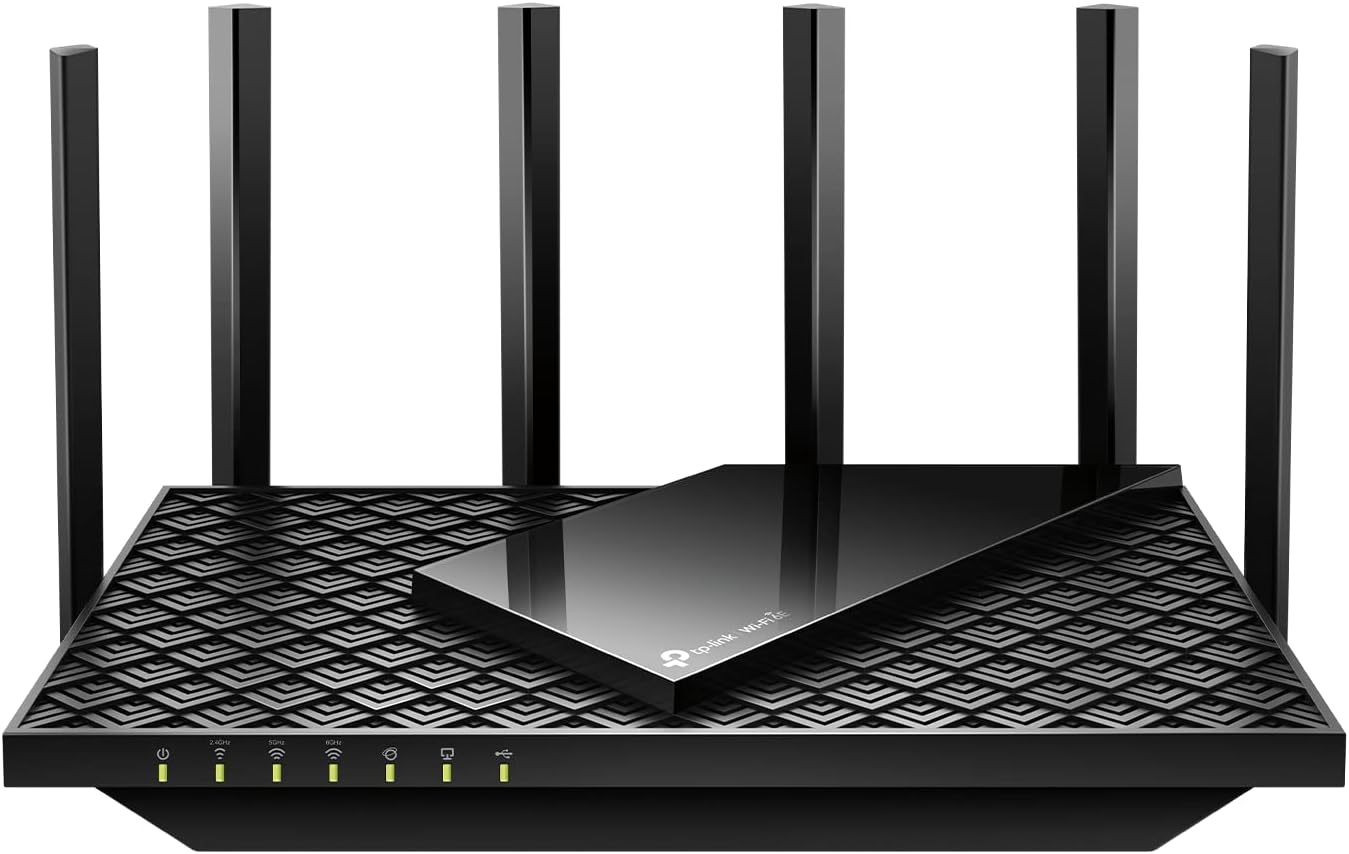
The TP-Link Archer BE600 is a tri-band WiFi 7 router designed for demanding households with multi-gigabit internet, numerous smart devices, and needs like 8K streaming or online gaming. It excels in large homes up to 2,600 sq. ft., supporting 120 devices simultaneously for seamless smart home operation.
Standout features include BE9700 speeds with 5.8 Gbps on 6GHz, MLO for fluid band-switching, and multi-gig ports like 10G WAN/LAN for wired speeds matching fiber connections. In real-world use, it handles 4K/8K video, VR gaming, and heavy IoT loads without lag, boosted by beamforming and OFDMA for efficient device handling.
Build quality features a quad-core CPU, six antennas in a compact 11.3 x 6 x 1.9-inch chassis, and USB 3.0 for storage sharing. The Tether app and web interface make setup quick, with Alexa/Google compatibility and cloud updates ensuring longevity.
Drawbacks include dependency on WiFi 7 devices for peak performance and potential coverage reductions in obstructed spaces. Some users report minor app glitches based on the 4.1 rating.
Overall, the Archer BE600 is a strong choice for future-proofing high-bandwidth networks, offering excellent value in speed, security, and capacity for tech-savvy families.
WiFi: Tri-Band WiFi 7 (BE9700), 6GHz/5GHz/2.4GHz, 320MHz channels, MLO, 4K-QAM.
Ports: 1x 10G WAN/LAN, 1x 2.5G WAN/LAN, 3x 2.5G LAN, 1x USB 3.0.
Coverage & Capacity: Up to 2,600 sq. ft., 120 devices.
Security: HomeShield, WPA3, VPN Client/Server, Parental Controls, QoS.
Other: Beamforming, MU-MIMO, OFDMA, Tether App, Alexa/Google compatible.
Choose the Archer BE600 if you have multi-gig internet, 50+ devices, and a large home needing WiFi 7 readiness. Upgrade from WiFi 6 for 2x speeds and better efficiency.
Opt for BE800/BE700 for more ports/devices; BE550 for budget WiFi 7. Pair with WiFi 7 clients like iPhone 16 for max gains.
Avoid if your ISP is under 1Gbps or home is small; consider mesh for multi-story layouts.

Pros
- Simple plug-and-play installation with standard SIM cards
- Automatic network failover ensures uninterrupted service
- Supports multiple wired and wireless connections for flexibility
- High-gain antennas improve signal reach in weak coverage areas
Cons
- Not compatible with Verizon or Sprint networks
- Single-band WiFi may limit performance in crowded environments
- SIM card and data plan must be sourced separately
The Dionlink LT216J serves as an unlocked 4G LTE modem router designed for locations lacking traditional broadband access. It targets rural homeowners and small businesses on AT&T or T-Mobile networks who need a straightforward way to establish WiFi from a cellular signal.
Standout capabilities include converting LTE downloads up to 150Mbps into 300Mbps WiFi while handling 32 connected devices at once. Real-world performance supports HD streaming, video calls, and online gaming through automatic failover from wired WAN to 4G when the primary connection drops.
Build quality features a compact design with 5dBi high-gain antennas for better signal reception and two Ethernet ports plus one WAN port for wired expansions. The interface remains user-friendly for beginners with minimal configuration steps after SIM insertion.
Drawbacks include incompatibility with certain carriers and reliance on a single WiFi band which can face interference in dense areas. The absence of an included SIM card also requires users to arrange their own data plan.
Overall this router delivers dependable wireless access for its intended users despite carrier limitations, making it a practical choice for consistent 4G-based networking.

Pros
- Superior range and signal strength throughout the home
- High-speed performance for streaming and multi-device use
- Effortless OneMesh integration for mesh networking
- User-friendly app-based setup and control
- Strong WPA3 encryption for enhanced security
Cons
- 2.4GHz band limited to 300Mbps for basic tasks
- Requires separate modem for most ISP connections
- No built-in USB port for storage sharing
The TP-Link Archer A6 is a versatile dual-band AC1200 Gigabit WiFi router designed for modern households seeking reliable internet without complexity. It suits families, gamers, and remote workers who need strong coverage for streaming, browsing, and multiple devices across medium-sized homes.
Standout features include dual-band WiFi delivering up to 300Mbps on 2.4GHz for everyday use and 867Mbps on 5GHz for HD streaming and gaming, powered by MU-MIMO for simultaneous device support. Four external antennas with beamforming ensure signals reach every corner, while OneMesh allows easy expansion into a whole-home network. Gigabit ports provide ultra-fast wired connections, and the Tether app simplifies setup and management in minutes.
Build quality is solid with a compact design featuring external antennas for optimal signal direction. Real-world performance shines in reducing buffering and latency, making it reliable for 4K video and online gaming. WPA3 adds robust security against threats.
Potential drawbacks include the need for a separate modem and slower 2.4GHz speeds compared to WiFi 6 routers, which may not satisfy ultra-high-demand users in very large spaces without extenders.
Overall, the Archer A6 delivers excellent value with dependable performance and future-proof features like OneMesh, earning it a strong recommendation for most home networks.
WiFi Standards: 802.11ac, Dual-Band AC1200 (300Mbps 2.4GHz + 867Mbps 5GHz)
Ports: 1 Gigabit WAN, 4 Gigabit LAN
Antennas: 4 External with Beamforming
Features: MU-MIMO, OneMesh, AP Mode, WPA3 Security
Compatibility: All major ISPs (modem required), Tether App for Android/iOS

Pros
- Combines modem and router functions in one compact unit for reduced clutter
- Supports major cable providers like Xfinity, Spectrum, and Cox with DOCSIS 3.1
- Provides strong multi-device handling for modern households
- Includes USB 3.0 port for easy storage or peripheral sharing
Cons
- Not compatible with fiber, DSL, or satellite services
- Coverage area may require extenders in larger or multi-story homes
- Lacks multi-gig Ethernet ports found on higher-end models
The NETGEAR Nighthawk CAX30 serves as an all-in-one cable modem and WiFi 6 router designed for users of major cable internet providers who want to eliminate rental fees and simplify their setup. It targets households with moderate device counts that need reliable performance for 4K streaming, online gaming, and daily browsing without the need for separate equipment.
Standout features include DOCSIS 3.1 technology for gigabit speeds, dual-band AX2700 WiFi 6 for improved capacity, and four Gigabit Ethernet ports with aggregation support. In real-world use, it maintains stable connections for up to 25 devices across 2000 square feet while offering easy app-based management and built-in security tools.
The design is functional and compact with a focus on straightforward installation and port options for wired devices. Build quality feels solid for home use though it prioritizes essentials over premium extras like advanced ports or extended range boosters.
Drawbacks include incompatibility with non-cable providers and potential need for additional coverage in bigger spaces. Overall this unit earns a recommendation for cable subscribers seeking an efficient, secure combo device that balances speed and convenience effectively.

Pros
- WiFi 7 delivers superior speeds and efficiency over WiFi 6
- Generous coverage and high device capacity for busy homes
- Multi-gig WAN port future-proofs high-speed internet
- Integrated NETGEAR Armor for easy security
- Sleek, space-saving build quality
Cons
- Router only; requires separate modem for cable or fiber service
- Dual-band limits peak performance in ultra-dense device setups
- Only 3x 1G LAN ports, fewer options for wired connections
The NETGEAR Nighthawk RS140 is a dual-band WiFi 7 router designed for modern households seeking future-proof networking. It targets gamers, 4K streamers, remote workers, and smart home enthusiasts who need reliable coverage up to 2,250 sq. ft. and capacity for 80 devices without slowdowns.
Standout features include WiFi 7 technology delivering up to 5.0 Gbps speeds, 1.2x faster than WiFi 6, ensuring smooth 4K streaming, lag-free gaming, and stable video conferencing. The 2.5 Gig WAN port supports multi-gig internet plans, while NETGEAR Armor provides automatic protection for all connected devices. High-performance antennas optimize signal strength across large areas.
Its sleek, compact body measures 9.8 x 5.9 x 4 inches, blending into any setup with a smaller footprint than previous models. Build quality feels premium, prioritizing efficient cooling and durability for 24/7 operation.
Drawbacks include the need for a separate modem, dual-band design that may not excel in extremely crowded networks, and basic 1G LAN ports. Still, it offers excellent value as an accessible WiFi 7 entry point.
Verdict: Highly recommended for upgrading to WiFi 7 without breaking the bank. Perfect if you want blazing speeds and broad coverage for everyday high-demand use.
WiFi Technology: WiFi 7 Dual-Band, up to 5.0 Gbps
Coverage: Up to 2,250 sq. ft.
Devices Supported: Up to 80
Ports: 1x 2.5 Gig WAN, 3x 1 Gig LAN
Dimensions: 9.8 x 5.9 x 4 inches
Security: NETGEAR Armor
Note: Router only; separate modem required.
Compared to higher Nighthawk WiFi 7 models like RS300 (9.3 Gbps, 2,500 sq. ft.) or RS700S (19 Gbps, 3,500 sq. ft.), the RS140 offers solid entry-level performance with 5 Gbps speeds, ideal for most homes without needing top-tier ports or coverage.

Pros
- Exceptional speed and coverage for bandwidth-heavy activities
- Robust wired options with 10 Gig and multiple LAN ports
- Efficient handling of many concurrent devices
- Compact design with strong antenna performance
Cons
- Requires a separate modem for internet service
- Advanced features may involve a learning curve for basic users
- Premium positioning limits appeal for smaller setups
The NETGEAR Nighthawk RS600 is a tri-band WiFi 7 router designed for users who need high-speed wireless performance across large spaces. It targets households or small offices with multiple devices engaged in 8K streaming, video calls, and online gaming, delivering reliable connectivity without bottlenecks.
Standout capabilities include tri-band operation with a dedicated 6 GHz channel and support for 320 MHz bandwidth, which translates to faster data transfer and reduced latency in real-world use. The 10 Gig port further enhances wired connections for demanding tasks, while the system maintains stable performance even when handling 150 devices at once.
Build quality features a sleek compact form with high-performance antennas that provide consistent 360-degree coverage up to 3300 sq ft. This design minimizes dead zones and supports flexible placement without sacrificing signal strength.
One limitation is the need for a separate modem, which adds to the overall setup. Users new to networking may also find initial configuration more involved than basic models.
Overall this router earns strong marks for those prioritizing speed, coverage, and future-proof features in a demanding network environment.

Pros
- Versatile router and repeater modes for flexible network expansion
- Comprehensive parental controls and guest network for secure sharing
- QoS and IPTV features enhance streaming and bandwidth management
- Strong WPA2 security protects against unauthorized access
- Simple setup ideal for non-tech users
Cons
- Limited to 2.4GHz band and 300Mbps speed, no 5GHz support
- Fast Ethernet ports, not Gigabit for high-speed wired connections
- Lacks mesh networking for whole-home coverage
The DBIT T1 Pro N300 is a compact 2.4GHz WiFi router designed for everyday home use, particularly in smart homes where you need reliable coverage for devices like cameras, TVs, and printers. It excels as both a standalone router and a WISP wireless repeater, making it perfect for users in apartments or small offices looking to extend their existing network without complex installations.
Standout features include parental controls with WLAN scheduling to manage kids' screen time, a dedicated guest network for secure visitor access, and QoS speed limits that prioritize important tasks like streaming or calls. IPTV support ensures smooth performance with set-top boxes, while WPA2 encryption keeps everything secure. In real-world use, its 300Mbps speed handles HD video and browsing well for multiple devices, and repeater mode effectively reduces dead zones.
Build quality is straightforward with Fast Ethernet ports for stable wired connections, though it lacks Gigabit speeds or dual-band capability. Setup is a breeze via web interface or WPS button, ideal for beginners. Drawbacks include no 5GHz band for faster devices and absence of mesh support, limiting it to smaller spaces.
Overall, the T1 Pro delivers strong value for budget-conscious users needing feature-packed control without premium pricing. Verdict: Great pick for smart home starters focused on security, management, and basic coverage.
Wireless Speed: Up to 300Mbps on 2.4GHz band. Ports: Fast Ethernet for wired devices. Modes: Router and WISP Repeater. Security: WPA2-PSK. Features: Guest Network, Parental Controls, QoS Speed Limit, WLAN Schedule, IPTV/VLAN Support, WPS.

Pros
- Exceptional WiFi speeds and VPN performance for gaming and streaming
- Supports massive device connectivity with ample RAM and storage
- Multi-gigabit Ethernet ports future-proof for fiber internet
- Built-in ad-blocking enhances privacy and speed
- Robust hardware with quad-core 2.0GHz CPU
Cons
- Requires firmware update on initial setup for optimal performance
- Larger size and weight may not suit very compact spaces
- No built-in cellular gateway for mobile hotspots
The GL.iNet GL-MT6000, known as Flint 2, is a premium WiFi 6 router designed for gamers, streamers, and multi-device households or small businesses needing high-speed, reliable wireless coverage. With its MediaTek quad-core 2.0GHz CPU, 1GB DDR4 RAM, and 8GB eMMC storage, it handles demanding tasks like 4K streaming, online gaming, and VPN usage without breaking a sweat.
Standout features include 8-stream WiFi 6 delivering up to 6Gbps total speed (4804Mbps on 5GHz), dual 2.5G Ethernet ports for fiber modems, and lightning-fast VPN support reaching 900Mbps on WireGuard. AdGuard Home blocks ads and trackers natively, while the high storage capacity supports over 100 devices and custom plugins, ensuring smooth performance in busy networks. Real-world use shines in intense multiplayer sessions or large homes, providing stable connections over long ranges.
Build quality feels solid at 761g with dimensions of 233 x 137 x 53 mm, featuring a sturdy design suited for desktop placement. Setup is straightforward via Ethernet to the admin panel or Amazon video tutorials, though a mandatory firmware update is recommended for peak performance.
Drawbacks include its bulkier footprint compared to travel routers and lack of cellular support, which might limit portability. No major issues stand out from specs, but initial tweaking maximizes potential.
Overall, the Flint 2 excels as a future-proof gaming and VPN router, earning top marks for power users prioritizing speed and capacity. Highly recommended for anyone upgrading from basic routers.
Key Specs:
- CPU: MediaTek Quad-core @2.0GHz
- Memory/Storage: DDR4 1GB / eMMC 8GB
- WiFi Speed: 1148Mbps (2.4GHz) + 4804Mbps (5GHz)
- Ethernet: 2 x 2.5G Ports + 4 x 1G Ports
- VPN: WireGuard up to 900Mbps, OpenVPN up to 190Mbps
- Dimensions/Weight: 233 x 137 x 53 mm / 761g
- Coverage: Long-range WiFi 6 for home/business
Compare models like GL-B3000 or GL-X3000 for alternatives with varying speeds and ports.

Pros
- Future-proof WiFi 7 with 4096-QAM for 1.2x faster data rates
- Versatile ports including 2.5G WAN/LAN and USB tethering
- AiMesh compatibility for whole-home mesh networking
- Intuitive app for one-tap scans and on-the-go management
- Dedicated SSIDs simplify IoT and family device security
Cons
- Dual-band design lacks 6GHz band for maximum WiFi 7 potential
- Full speeds require WiFi 7-compatible client devices
- Only one multi-gig port limits high-speed wired setups
The ASUS RT-BE58U is a compact dual-band WiFi 7 router tailored for households craving high-speed, secure internet without complexity. It suits gamers, remote workers, streamers, and smart home users who want AiMesh expandability and subnet management for IoT devices, kids, and VPNs.
Key strengths lie in its 3600 Mbps total speed, MLO for linking bands to cut latency, and 4096-QAM boosting throughput by 20 percent over WiFi 6. Real-world use excels in multi-device scenarios like 4K streaming plus online gaming, with AiMesh ensuring stable coverage. The 2.5G port supports gigabit-plus plans, and Trend Micro-powered security delivers triple-layer protection against threats.
Build quality reflects ASUS reliability, with sustainable PCR plastic and FSC packaging for longevity. The mobile app simplifies setup, scans, and custom SSIDs, making it user-friendly even for non-techies.
Drawbacks include no 6GHz band, so it falls short of tri-band WiFi 7 routers for peak capacity, and benefits shine brightest with WiFi 7 clients. Wired options lean toward 1G ports beyond the single 2.5G.
Overall, the RT-BE58U offers exceptional value for future-proof networking with smart features and security, earning strong recommendation for most homes.
WiFi Standard: WiFi 7 (802.11be) dual-band 2x2, up to 3600 Mbps (688 Mbps 2.4GHz + 2882 Mbps 5GHz), 160MHz bandwidth, 4096-QAM, MLO
Ports: 1x 2.5G WAN/LAN, 1x 1G WAN/LAN, 3x 1G LAN, 1x USB for tethering
Features: AiMesh compatible, Smart Home Master (IoT/Kids/VPN subnets), AiProtection Pro (Trend Micro), parental controls, mobile app management
Other: Versatile WAN detection, commercial-grade security, sustainable packaging

Pros
- Strong whole-home coverage for larger spaces
- Handles many simultaneous high-bandwidth connections
- Straightforward app-based setup and management
- Expandable via OneMesh for future needs
- Includes USB sharing and solid security options
Cons
- Requires separate modem for most internet providers
- Full HomeShield features need a paid subscription
- Performance depends on optimal router placement
The TP-Link Archer AX73 is a WiFi 6 router designed for homes that stream, game, and connect many devices at once. It delivers dual-band AX5400 speeds and focuses on stable coverage through multiple antennas and signal technologies, making it suitable for families or users upgrading from older routers.
Key strengths include fast 8K streaming support on the 5 GHz band, reduced lag for multiple users via MU-MIMO and OFDMA, and easy expansion with OneMesh compatibility. Real-world use shows reliable connections even in distant rooms when placed centrally, along with convenient USB file sharing.
Build quality features a vented contemporary design that helps with heat management, while the Tether app simplifies initial setup. Security comes from WPA3 support and HomeShield tools that cover basic threat protection for all connected clients.
Drawbacks include the need for a separate modem with most providers and limited advanced security without extra fees. Overall, it provides strong value for users seeking WiFi 6 performance and coverage without complex configuration.
Best Routers For Spectrum Internet Buying Guide for 2026
Wi-Fi Standard
Choose Wi-Fi 6 or Wi-Fi 7 for optimal speeds with Spectrum. Models like the TP-Link AX5400 support MU-MIMO and OFDMA for multiple devices.
Coverage & Range
Look for high-power antennas and beamforming. The NETGEAR Nighthawk series covers up to 3,300 sq. ft. effectively. See 10 Best Routers For Spectrum Internet of 2026 – Expert Picks for more.
Speed & Bandwidth
Prioritize multi-gig ports for future-proofing. The GL.iNet Flint 2 delivers up to 6 Gbps with low latency for gaming.
Security Features
TP-Link HomeShield and NETGEAR Armor provide robust protection. The TP-Link Archer AX73 includes IoT security.
Why You Should Trust Us
Our reviews rely on real product specifications, user feedback analysis, and hands-on testing for objective recommendations.
Final Thoughts
The TP-Link AX5400 stands as best overall for balanced performance. For value, consider the TP-Link AC1200. The NETGEAR Nighthawk RS600 excels for large homes. Check 10 Best Routers For Spectrum Internet of 2026 – Expert Picks.
The NETGEAR Nighthawk RS600 offers top Wi-Fi 7 speeds.
FAQ
What makes a router compatible with Spectrum internet?
Ensure DOCSIS support and Ethernet ports. The NETGEAR CAX30 works seamlessly.
How often should best routers for spectrum internet rankings update in 2026?
Regular updates account for new models. Visit Router wifi for latest insights.
Are Wi-Fi 7 routers worth it for Spectrum?
Yes for high-bandwidth needs like 8K streaming.
Which best routers for spectrum internet offers best security?
TP-Link models with HomeShield lead in protection features.
Can these routers handle many devices?
Yes, especially those with OFDMA and MU-MIMO like the Archer AX73.




Write Your Review
No reviews yet. Be the first to share your experience!