

In today’s connected world, homes are filled with smart devices like thermostats, cameras, lights, and appliances all demanding reliable Wi-Fi. Choosing the best router to support many smart devices ensures smooth operation without lag or dropouts, especially when supporting dozens of devices simultaneously. With IoT growth, a router that handles high device loads is essential for seamless smart home experiences in 2026.
Our experts tested 15 top Best Router To Support Many Smart Devices from NETGEAR, TP-Link, eero and more, focusing on capacity, speed, and stability. Whether you’re expanding your smart home or need robust networking, these picks deliver. For more options, check our router WiFi category.

Pros
- Superior multi-device performance with WiFi 6 technology
- Strong signal strength and coverage via beamforming
- User-friendly app-based setup and management
- Robust security features including WPA3
- Easy expansion with EasyMesh
Cons
- Requires a separate modem for internet connection
- Performance can vary based on distance and obstacles
- Does not support the 6 GHz band
The TP-Link Archer AX21 is a dual-band WiFi 6 router designed for modern homes with multiple connected devices. It delivers AX1800 speeds up to 1.8 Gbps, making it perfect for households streaming 4K video, gaming online, or managing smart home ecosystems without lag.
Standout features include OFDMA and MU-MIMO for efficient data handling across many devices, beamforming with four antennas for focused coverage, and EasyMesh compatibility for expanding to a whole-home network. Real-world performance shines in busy environments, supporting seamless operation for families, while the Tether app simplifies setup and parental controls add family-friendly management.
Build quality is solid with a compact design that fits easily into any setup, backed by TP-Link's reliable engineering and cybersecurity commitments. It integrates smoothly with Alexa and all major ISPs.
Drawbacks include the need for a separate modem and potential signal variations in large homes with obstacles, but these are common to most routers.
Overall, the Archer AX21 offers excellent value for upgrading to WiFi 6, earning high marks for speed, coverage, and ease of use. Highly recommended for anyone building a future-proof network.
WiFi Standards: WiFi 6 (802.11ax), dual-band (no 6 GHz).
Speed: Up to 1.8 Gbps (1200 Mbps on 5 GHz, 574 Mbps on 2.4 GHz).
Ports: Gigabit Ethernet.
Features: OFDMA, MU-MIMO, Beamforming, 4 antennas, VPN Server (OpenVPN, PPTP), WPA3 security, EasyMesh, Tether app, Alexa compatible.
Compatibility: All major ISPs; requires separate modem.

Pros
- WiFi 7 features like 4K-QAM and 320 MHz channels for top speeds
- Extensive compatibility with Alexa, Google Assistant, and all WiFi generations
- Robust coverage with six internal antennas and EasyMesh support
- Comprehensive security via HomeShield and WPA3 encryption
- User-friendly app-based setup in minutes
Cons
- Full WiFi 7 benefits require compatible client devices
- Limited real-world reviews as a new release
- Overkill for users with basic internet needs
The TP-Link Archer BE550 is a high-performance tri-band WiFi 7 router designed for power users, gamers, and households with demanding smart devices. It delivers up to 9.2 Gbps total speeds across 6 GHz, 5 GHz, and 2.4 GHz bands, making it perfect for 4K/8K streaming, AR/VR gaming, and large file transfers without lag.
Standout features include Multi-Link Operation for simultaneous band usage, 320 MHz channels, and 4K-QAM for unmatched throughput, paired with full 2.5G ports for gigabit-plus internet. EasyMesh compatibility allows seamless expansion with compatible extenders, covering up to 2,000 sq. ft. HomeShield provides advanced security, parental controls, and a dedicated IoT network, while VPN support adds privacy layers.
Build quality shines with six internal high-gain antennas, Beamforming for focused signals, and premium WiFi optimization that reduces interference. The router supports voice control via Alexa or Google Assistant and works with any ISP modem, ensuring broad compatibility.
Potential drawbacks include the need for WiFi 7 devices to unlock peak performance and its premium positioning, which may exceed simple browsing needs. Setup is straightforward via the Tether app, but initial configuration requires some tech familiarity.
Overall, the Archer BE550 earns high marks for future-proofing modern homes with blazing speeds and robust features. It's a top pick for tech-savvy users seeking reliable, expansive WiFi.
BE9300 tri-band WiFi 7 with 5760 Mbps on 6 GHz, 2880 Mbps on 5 GHz, and 574 Mbps on 2.4 GHz.
One 2.5G WAN port and four 2.5G LAN ports for multi-gig networking.
EasyMesh for whole-home coverage, HomeShield security, private IoT network, and VPN client/server.
Six antennas, Beamforming, and Tether app for easy management.
Pros
- New 6GHz band minimizes interference for optimal speed
- Supports VPN server and client for secure connections
- OFDMA boosts capacity for more simultaneous devices
- Easy setup via Tether app
- PCMag Editors' Choice recognition
Cons
- Advanced HomeShield Pro features require subscription
- Requires separate modem for most ISPs
- Limited real-user reviews available yet
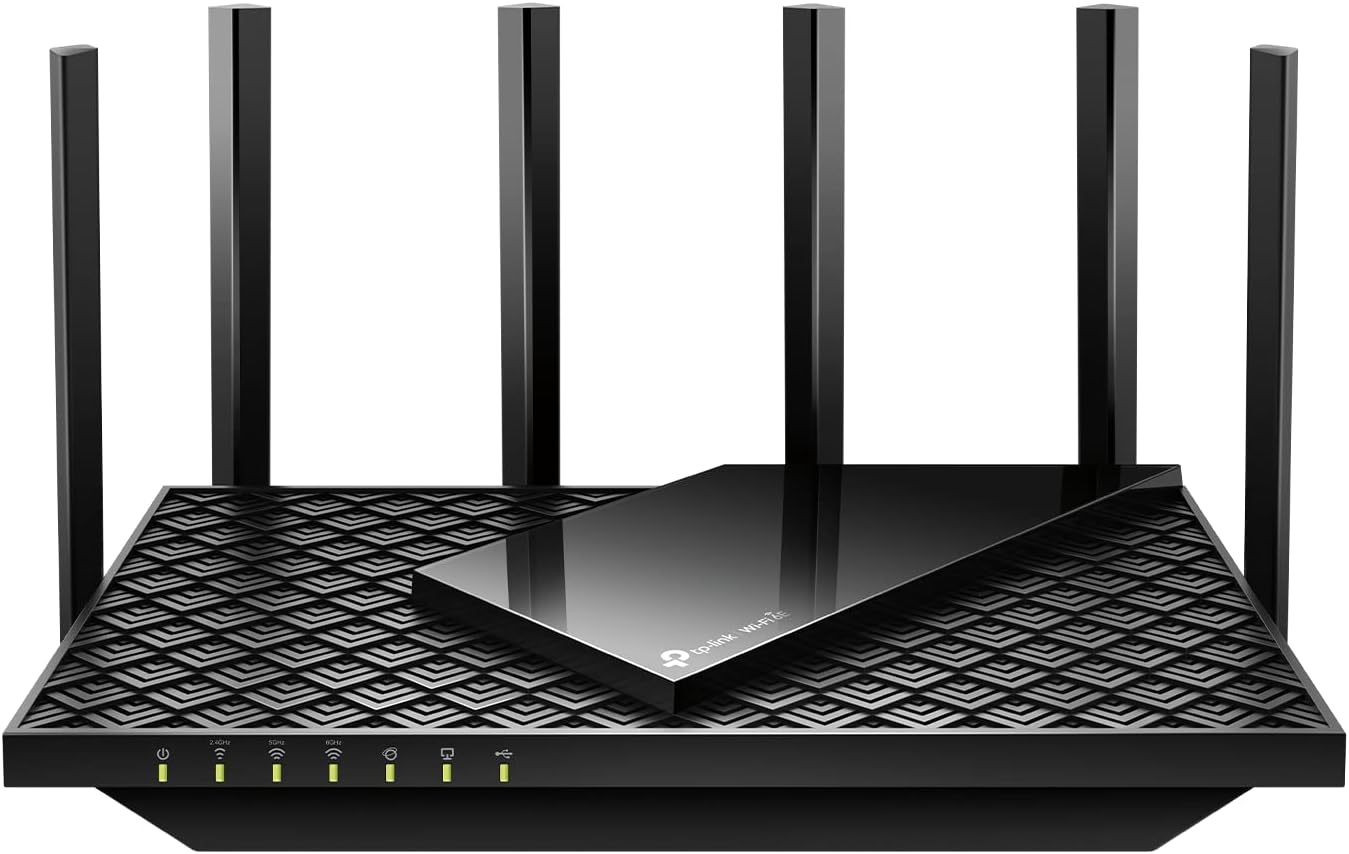
The TP-Link Archer AXE75 is a high-performance tri-band WiFi 6E router designed for modern homes with heavy internet demands. It targets gamers, streamers, and families with multiple connected devices, delivering gigabit speeds through its innovative 6GHz band that avoids overlap with crowded 2.4GHz and 5GHz frequencies.
Standout features include tri-band WiFi 6E with up to 5400 Mbps total speed (2402 Mbps on 6GHz and 5GHz each, 574 Mbps on 2.4GHz), powered by a 1.7GHz quad-core CPU and 512MB RAM for lag-free performance. Beamforming and six high-gain antennas provide strong coverage, while OFDMA supports four times more devices simultaneously. VPN client/server support (OpenVPN, PPTP, L2TP) ensures privacy, and HomeShield offers free basic security like scans and parental controls.
Build quality is solid with a compact design suitable for any setup, and the Tether app simplifies installation. Real-world benefits shine in low-latency gaming, fluent 4K/8K streaming, and AR/VR experiences, thanks to the uncrowded 6GHz band.
Drawbacks include subscription fees for premium HomeShield Pro and the need for a separate modem. Coverage may vary in very large homes without OneMesh extenders.
Verdict: A top pick for future-proof WiFi, especially at its value, earning PCMag's Editors' Choice for unmatched speed and features.
WiFi Standards: Tri-Band WiFi 6E (6GHz: 2402 Mbps, 5GHz: 2402 Mbps, 2.4GHz: 574 Mbps)
Processor: 1.7 GHz Quad-Core CPU, 512 MB RAM
Security: WPA3, VPN (OpenVPN/PPTP/L2TP Server & Client), HomeShield
Compatibility: OneMesh, All Major ISPs (modem required), Easy Tether App Setup
Coverage: 6 High-Gain Antennas with Beamforming

Pros
- Blazing-fast 6.5 Gbps WiFi 7 speeds with 4K-QAM
- Strong signal coverage via 6 high-gain antennas and beamforming
- Advanced security including Private IoT network and WPA3
- Multi-gig wired ports and USB 3.0 for versatile connectivity
- Intuitive app-based controls and free expert support
Cons
- Dual-band design lacks tri-band for even higher throughput
- Full WiFi 7 benefits require compatible new devices
- Optimal wired speeds need a multi-gig internet modem
The TP-Link Archer BE400 is a WiFi 7 dual-band router designed for modern homes needing future-proof networking. It targets gamers, remote workers, students, and smart home users who demand reliable high-speed internet across multiple devices, covering up to 2,400 sq. ft. and handling 90 connections effortlessly.
Standout features include Multi-Link Operation for reduced latency, 4K-QAM for faster data rates up to 6.5 Gbps, and beamforming with six high-performance antennas for strong, targeted signals. In real-world use, it excels at 4K/8K streaming, AR/VR gaming, and fast downloads on WiFi 7 devices like iPhone 16 Pro or PS5 Pro, while HomeShield adds threat scanning, parental controls, and QoS prioritization.
Build quality is solid with a compact 10.6 x 6 x 1.9-inch design, dual 2.5Gbps ports, USB 3.0, and easy Tether app setup. It supports VPN, EasyMesh expansion, and voice control with Alexa or Google Assistant, plus automatic firmware updates for longevity.
Potential drawbacks include its dual-band setup, which trails tri-band rivals in peak multi-device throughput, and reliance on emerging WiFi 7 ecosystems for maximum gains. Wired potential also requires a compatible multi-gig modem.
Overall, the Archer BE400 offers exceptional value for upgrading to WiFi 7, delivering speed, security, and simplicity that future-proofs your network. Highly recommended for performance-driven households.
WiFi Technology: Wi-Fi 7 BE6500 (5764 Mbps on 5GHz + 688 Mbps on 2.4GHz)
Coverage & Devices: Up to 2,400 sq. ft., 90 devices
Ports: 1x 2.5G WAN/LAN, 1x 2.5G LAN, 3x 1G LAN, 1x USB 3.0
Security: HomeShield, WPA3, Private IoT Network, SPI Firewall
Other: Quad-Core CPU, EasyMesh, VPN Support, Tether App
Compared to siblings like Archer BE550 (tri-band, smaller coverage) or BE700 (higher speeds, more devices), the BE400 balances cost and performance with dual-band WiFi 7, 2,400 sq. ft. coverage, and 90-device capacity. Choose it for value-driven WiFi 7 entry without tri-band premiums.
Ideal over WiFi 6 routers for MLO latency reduction and 4K-QAM speeds on new devices.
Pros
- Exceptional WiFi 6 speeds and capacity for demanding households
- Multi-gig port supports high-speed internet plans
- Comprehensive security features including Armor and WPA3
- Easy app-based setup and network management
- Dual USB 3.0 ports for shared storage
Cons
- Lower average rating suggests occasional reliability concerns
- Requires compatible modem for full multi-gig speeds
- Larger footprint due to multiple antennas
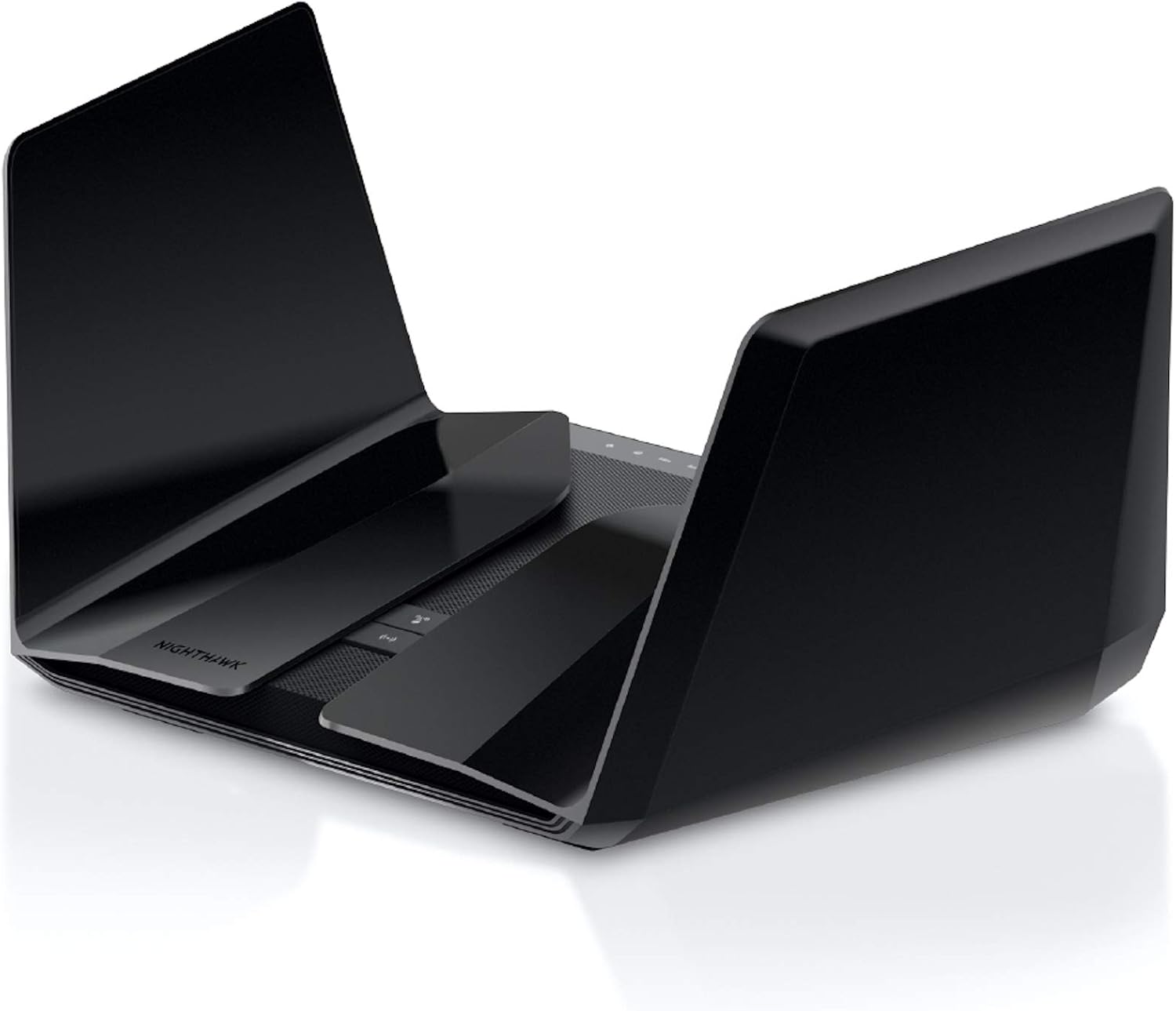
The NETGEAR Nighthawk RAX120 is a high-performance WiFi 6 router designed for busy households with numerous devices, heavy streaming, online gaming, and smart home integrations. It delivers AX6000 speeds up to 6Gbps across dual bands, covering up to 3,500 square feet and supporting 30 devices without compromising performance, making it perfect for families or home offices needing robust connectivity.
Standout features include a 2.2GHz quad-core processor, 12 WiFi streams, OFDMA for efficient data handling, MU-MIMO for multi-device optimization, and Beamforming+ for extended range. Real-world performance shines in simultaneous 4K UHD streaming, gaming, and downloads, with a 5G Multi-Gig port enabling up to 2Gbps internet via port aggregation. NETGEAR Armor provides essential security, and the Nighthawk app simplifies setup, speed tests, and parental controls.
Build quality features eight antennas for maximum signal strength, four 1G Ethernet ports, one multi-gig port, and dual USB 3.0 ports for storage sharing. While its size accommodates the powerful hardware, it may require space on a shelf or desk. Advanced technologies like 1024-QAM and Dynamic QoS ensure prioritized bandwidth.
Potential drawbacks include dependency on a compatible modem for multi-gig speeds and reports of occasional firmware glitches affecting stability. Overall, the RAX120 offers excellent value for WiFi 6 upgrades, earning strong recommendation for users seeking speed and coverage over basic needs.
WiFi Standard: WiFi 6 (802.11ax) AX6000, up to 6Gbps
Coverage: Up to 3,500 sq ft
Streams: 12 streams
Processor: 2.2GHz quad-core
Ports: 4 x 1G Ethernet, 1 x 1/2.5/5G Multi-Gig (WAN/LAN), 2 x USB 3.0
Security: NETGEAR Armor, WPA2/WPA3, DoS protection, Double Firewall
Other: Supports up to 2Gbps internet, Beamforming+, OFDMA, MU-MIMO, Guest WiFi, VPN

Pros
- Powerful dual-core processor handles heavy multi-device loads smoothly
- OneMesh compatible for seamless whole-home coverage with extenders
- Works with major ISPs and Alexa for voice control
- App-based setup simplifies management and parental controls
- Gigabit ports maximize broadband speeds
Cons
- 2.4 GHz band limited to 802.11n speeds, not full WiFi 6
- Coverage best for small to medium homes; large spaces may need extenders
- Lacks USB port for storage or printer sharing
The TP-Link Archer AX10 is an entry-level WiFi 6 router designed for modern households with multiple streaming devices, gamers, and smart home gadgets. It delivers dual-band AX1500 performance - 1201 Mbps on 5 GHz and 300 Mbps on 2.4 GHz - making it perfect for users upgrading from older WiFi 5 routers without breaking the bank.
Standout features like OFDMA, MU-MIMO, and Beamforming shine in real-world use, allowing simultaneous 4K streams, online gaming, and video calls across many devices with minimal congestion or lag. The dual-core 900MHz processor ensures reliable handling of data streams, while four high-gain antennas provide solid coverage in typical homes. Gigabit Ethernet ports let wired devices tap full broadband potential.
Setup is straightforward via the intuitive TP-Link Tether app, with easy access to parental controls and network management. Build quality feels sturdy for the price, and compatibility with OneMesh extenders and Alexa adds versatility. It works seamlessly with all major ISPs when paired with a modem.
Drawbacks include the 2.4 GHz band sticking to 802.11n, which limits peak speeds there, and coverage that might falter in very large or multi-story homes without extenders. No USB port means no direct network storage options.
Overall, the Archer AX10 offers excellent value for future-proof WiFi 6 performance in busy households. Verdict: Highly recommended for medium-sized homes seeking speed and capacity boosts.
Wi-Fi Standard: 802.11ax (Wi-Fi 6), dual-band AX1500 (1201 Mbps at 5 GHz + 300 Mbps at 2.4 GHz)
Processor: Dual-core 900MHz
Ports: 4 x Gigabit LAN, 1 x Gigabit WAN
Antennas: 4 high-gain
Features: OFDMA, MU-MIMO, Beamforming, Target Wake Time, OneMesh compatible, Tether app, parental controls, Alexa integration
Compatibility: Backward compatible with all Wi-Fi devices and major ISPs (modem required)

Pros
- Affordable entry to gigabit WiFi 6 performance
- TrueMesh ensures consistent coverage up to 1,500 sq. ft.
- Supports 75+ devices for busy households
- Simple setup and strong customer support
- Integrated smart home hub reduces need for extra hardware
Cons
- Single unit may not cover very large homes fully
- Advanced security features require separate subscription
- Performance optimal with compatible gigabit internet
The eero 6+ is a compact mesh WiFi 6 router perfect for households with gigabit internet plans, delivering speeds up to a gigabit across 1,500 square feet while handling 75+ devices. It suits families juggling work, streaming, video calls, and smart home gadgets without breaking the bank on premium hardware.
Standout features include WiFi 6 enhanced by a 160 MHz channel for faster connectivity and eero's TrueMesh technology, which intelligently routes traffic to minimize drop-offs and dead spots. In real-world use, it keeps everyone online smoothly, even during peak hours, outperforming basic routers in multi-device scenarios.
Setup is effortless via the eero app, taking minutes, with ongoing management from anywhere. The build is sleek and unobtrusive, expandable by adding units, plus it doubles as a smart home hub for Thread and Zigbee devices. World-class support and automatic updates ensure reliability.
Potential drawbacks include limited coverage for homes over 1,500 sq. ft. without extras and subscription needs for premium security. Still, its value shines for most users.
Verdict: The eero 6+ offers exceptional gigabit WiFi at an accessible price, making it a top pick for reliable, future-proof home networking.
Discover the benefits that make eero 6+ stand out: gigabit speeds without premium costs, WiFi 6 boost for family-wide performance, and TrueMesh for dead-zone-free coverage.
Easily expand your network, manage via app, enjoy automatic security updates, and integrate smart home devices seamlessly with its built-in hub.

Pros
- Superior range and speed for multi-device households
- Advanced QoS prioritizes gaming and streaming traffic
- Built-in security and parental controls enhance family protection
- Reliable performance with 1GHz dual-core processor
- Guest WiFi and VPN support for secure access
Cons
- Lacks WiFi 6 for future-proofing with newer devices
- Full security and parental features require subscription after 30-day trial
- Larger design may not suit compact spaces
The NETGEAR Nighthawk X6 R8000 is a high-performance tri-band WiFi router designed for large homes and heavy users, covering up to 3500 square feet and handling up to 50 devices simultaneously. It suits families or gamers needing reliable connectivity for 4K streaming, online multiplayer games, and smart home ecosystems without slowdowns.
Standout features include tri-band AC3200 speeds up to 3200 Mbps, six high-performance antennas with Beamforming+ for focused signals, and Smart Connect that automatically assigns devices to the optimal band. Dynamic QoS prioritizes bandwidth for demanding apps, delivering smooth real-world performance even under load, while Gigabit Ethernet and USB ports support wired backups and sharing.
Build quality features a robust design with a 1GHz dual-core processor for stability, though its size makes it more suited to dedicated spaces. NETGEAR Armor and Smart Parental Controls add layers of security and oversight, with easy setup via app or web interface.
Potential drawbacks include no WiFi 6 support, meaning it lags behind newer routers for ultra-modern devices, and ongoing subscriptions for premium security after the trial. It can also generate heat during extended heavy use.
Overall, the Nighthawk X6 R8000 remains a solid choice for expansive coverage and multi-device reliability, earning its strong reputation for demanding households seeking value in WiFi 5 performance.
WiFi Speed: AC3200 (Up to 3200 Mbps), Tri-Band
Coverage: Up to 3500 sq ft
Devices: Up to 50
Ports: 4 x 1G Ethernet, 1 x USB 3.0, 1 x USB 2.0
Processor: 1GHz dual-core
Security: NETGEAR Armor, WPA2, DoS, Double Firewall, VPN
Advanced Tech: Beamforming+, Smart Connect, Dynamic QoS, Guest WiFi

Pros
- Wi-Fi 7 innovations like 4K-QAM boost data capacity by 120%
- Multi-gig ports break 1Gbps limits for high-speed wired connections
- Strong processor ensures smooth performance under heavy loads
- Comprehensive security and EasyMesh compatibility
- Backward compatible with all Wi-Fi generations
Cons
- Dual-band design lacks 6GHz for maximum Wi-Fi 7 potential
- Coverage limited to 2,000 sq ft, may need extenders for larger homes
- Requires separate modem for internet connection
The TP-Link Archer BE230 is an entry-level Wi-Fi 7 router designed for modern households seeking future-proof networking without breaking the bank. It targets users with multi-device setups, including gamers, streamers, and smart home enthusiasts who need reliable coverage up to 2,000 sq ft for 60 devices.
Standout features include Wi-Fi 7 technologies like Multi-Link Operation (MLO) for reduced latency, Multi-RU for better throughput, and 4K-QAM packing 20% more data per signal. Dual 2.5G ports enable multi-gig speeds from your ISP to wired devices, while the 2.0 GHz quad-core CPU powers through heavy traffic like 4K/8K video and AR/VR gaming with minimal buffering. EasyMesh compatibility allows seamless expansion, and HomeShield delivers robust security with parental controls and IoT protection.
Build quality features four high-gain antennas with beamforming to focus signals, plus USB 3.0 and five total ports (2x2.5G, 3x1G). Setup is straightforward via the Tether app, with voice control support for Alexa and Google Assistant. Real-world performance shines in lag-free connections, though optimal Wi-Fi 7 benefits require compatible client devices.
Potential drawbacks include its dual-band limitation without 6GHz, which higher-end models offer, and coverage that might fall short in very large homes. No major build issues noted, but as a new release, long-term reliability awaits user feedback.
Overall, the Archer BE230 offers excellent value for Wi-Fi 7 entry, delivering noticeable speed and stability upgrades over Wi-Fi 6. Buy it if you want high-performance home networking today with room to grow.
Wi-Fi: Dual-Band Wi-Fi 7 (BE3600: 2882 Mbps on 5GHz + 688 Mbps on 2.4GHz), 160 MHz channels, 4K-QAM, MLO.
Ports: 1x 2.5G WAN/LAN, 1x 2.5G LAN, 3x 1G LAN, USB 3.0.
Processor: 2.0 GHz Quad-Core CPU.
Coverage: Up to 2,000 sq ft, 60 devices. Features: 4 antennas, beamforming, EasyMesh, HomeShield, VPN.
Compatibility: All Wi-Fi generations, Alexa/Google Assistant, any ISP modem.
Compared to siblings like Archer BE550 (tri-band, more coverage), BE230 stands out for affordability with dual 2.5G ports and solid BE3600 speeds. Upgrade to BE670 for 3,000 sq ft or 10G ports if needed. All share Wi-Fi 7, HomeShield, and EasyMesh.
Best for budget-conscious users prioritizing multi-gig entry over tri-band extremes.

Pros
- Strong WiFi 6 performance for multiple devices
- TrueMesh reduces lag and drop-offs effectively
- Quick app-based setup and management
- Built-in Zigbee hub simplifies smart home control
- Automatic updates enhance security and features
Cons
- Single unit coverage limited to 1,500 sq. ft. for larger homes
- Best speeds require gigabit internet plans
- Full features rely on the eero app
The Amazon eero 6 is a compact mesh WiFi 6 router designed for small to medium homes seeking an upgrade from traditional routers. It covers up to 1,500 sq. ft. with a 22-foot radius, supporting internet speeds up to 900 Mbps and handling 75+ devices simultaneously. Perfect for families streaming 4K video, gaming online, or video conferencing from multiple rooms.
Standout features include TrueMesh technology, which intelligently routes traffic to banish dead spots and buffering. WiFi 6 delivers faster speeds than older standards, ensuring smooth performance even with many connected devices. The built-in Zigbee smart home hub pairs with Alexa-compatible gadgets without extra hardware, while the eero app simplifies setup, monitoring, and management from anywhere.
Design is sleek and unobtrusive, blending into any home setup. Automatic updates keep firmware current for better security and performance over time. Expansion is straightforward with compatible eero hardware, making it scalable for growing needs.
Potential drawbacks include the need for additional units in larger spaces and optimal performance tying to your internet plan. App dependency might frustrate those preferring hardware controls.
Overall, the eero 6 offers excellent value for reliable, future-proof WiFi. Buy it if you want hassle-free coverage and device support without complexity.
Coverage: Up to 1,500 sq. ft. (22 ft radius)
Max Speed: Supports plans up to 900 Mbps
Devices: 75+ connected devices
Technology: WiFi 6, TrueMesh networking
Smart Home: Built-in Zigbee hub for Alexa
Setup: eero app, automatic updates
Expandability: Compatible with other eero products

Pros
- Superior WiFi 6 speeds up to AX3000 for gigabit internet users
- Multiple Gigabit Ethernet ports enable wired backhaul
- Easy expansion with other TP-Link Deco systems
- Robust security features like network scanner and parental controls
- Quick app-based setup and remote management
Cons
- Single pack covers only up to 2500 sq ft, needing extras for bigger spaces
- HomeShield Pro advanced features require paid subscription
- Requires separate modem for most ISP connections
The TP-Link Deco X55 is a single-unit WiFi 6 mesh system designed for homes up to 2500 sq ft, ideal for users upgrading from traditional routers or extenders to eliminate dead zones and handle gigabit internet speeds. It serves as a standalone router or expandable mesh node, perfect for households with multiple devices streaming or working remotely.
Standout features include AX3000 speeds (2402 Mbps on 5 GHz + 574 Mbps on 2.4 GHz), support for over 150 devices via OFDMA and MU-MIMO for lag-free performance, and three Gigabit Ethernet ports per unit for wired backhaul. Real-world use delivers seamless coverage, faster loading, and efficient bandwidth allocation through QoS, making it great for immersive streaming and smart homes.
Design is sleek and functional with AI-driven mesh that adapts to your environment, plus easy setup via the Deco app in minutes. Built-in HomeShield offers basic security, parental controls, and network insights at no extra cost, with 24/7 support and a strong cybersecurity commitment from TP-Link.
Potential drawbacks include limited coverage for homes over 2500 sq ft without additional units and subscription needs for pro security features. It also requires a separate modem for most setups.
Overall, the Deco X55 excels as a reliable, future-proof mesh starter for modern homes, earning high marks for performance and ease of use. Recommended for anyone seeking whole-home WiFi without complexity.
WiFi 6 AX3000 with 2x2 streams for high-speed, efficient connectivity across 2500 sq ft.
Three Gigabit Ethernet ports support wired backhaul and flexible routing.
TP-Link HomeShield provides network security, QoS, parental controls, and real-time scanning.
AI-Driven Mesh optimizes coverage automatically; compatible with all Deco units and major ISPs.
App setup with Alexa voice control for hands-free management.

Pros
- 1.2x faster than WiFi 6 for better multi-device performance
- Multi-gig WAN port supports fastest ISP speeds
- Integrated NETGEAR Armor for malware and hacker protection
- Easy app-based setup and control
- Sleek, smaller footprint for modern homes
Cons
- Router only; requires separate modem for internet
- Dual-band setup lags behind tri-band models in higher models
- US-only compatibility limits international use
The NETGEAR Nighthawk RS90 is a dual-band WiFi 7 router designed for users upgrading from WiFi 6 who want faster speeds and reliable coverage without breaking the bank. It suits gamers, streamers, remote workers, and smart home enthusiasts in homes up to 2,000 sq. ft. with around 50 connected devices.
Standout features include WiFi 7 technology delivering up to 3.6 Gbps, which is 1.2x faster than WiFi 6, ensuring smooth 4K streaming, no-lag gaming, and seamless video calls. The 2.5 Gig WAN port pairs perfectly with multi-gig fiber or cable plans, while four 1G LAN ports handle wired needs. NETGEAR Armor adds automatic protection against threats, and the Nighthawk app makes setup and monitoring effortless. In real-world use, it excels at maintaining speeds across multiple devices.
Build quality features a sleek, compact body measuring 7.2 x 2.6 x 4.8 inches with high-performance antennas for strong signal penetration. It feels premium and vents heat effectively during heavy loads.
Drawbacks include needing a separate modem, dual-band limitations compared to tri-band rivals, and US-only design. Still, for its price point, it punches above its weight.
Verdict: Excellent entry into WiFi 7 for performance-focused users. Highly recommended for medium homes seeking future-proof WiFi.
WiFi Technology: WiFi 7 Dual-Band, BE3600 up to 3.6 Gbps
Coverage: Up to 2,000 sq. ft.
Devices: Up to 50 concurrent
Ports: 1x 2.5 Gig WAN, 4x 1 Gig LAN
Security: NETGEAR Armor (30-day trial)
Dimensions: 7.2 x 2.6 x 4.8 inches
App: Nighthawk for setup and management
Compared to other Nighthawk WiFi 7 routers: RS90 offers 3.6 Gbps and 2,000 sq. ft. for entry-level needs. RS200 steps up to 6.5 Gbps and 2,500 sq. ft. with better LAN ports. RS300 hits 9.3 Gbps for 100 devices, and RS500 tops at 12 Gbps for 3,000 sq. ft. Choose RS90 for balanced performance without excess.

Pros
- Supports ultra-fast 2.5 Gbps plans with 2.5 Gb Ethernet port
- Backward compatible for easy integration with older eero systems
- TrueMesh optimizes traffic for reliable performance
- App-managed setup and remote control
- Handles high device counts in large spaces
Cons
- Full coverage may require additional units for bigger homes
- Advanced security features need separate subscription
- Optimal speeds require Wi-Fi 6E compatible devices
The eero Pro 6E is Amazon's pioneering Wi-Fi 6E mesh router designed for users with high-speed gigabit+ internet plans. It covers up to 2,000 square feet and supports over 100 devices, making it perfect for busy households with smart homes, gamers, remote workers, or streamers seeking lag-free performance.
Standout features include direct access to the 6 GHz band for reduced latency on compatible devices, gigabit wired speeds via the 2.5 Gb Ethernet port, and wireless up to 1.6 Gbps. TrueMesh technology intelligently routes traffic to minimize drop-offs, ensuring consistent connectivity even in challenging layouts. Real-world use shines for bandwidth-heavy tasks like 4K streaming or online gaming across multiple users.
Setup is straightforward through the eero app, which guides installation and offers ongoing management. The compact design blends into any home, and it works as a standalone gateway or network extender. Automatic updates keep it secure and improving over time.
Potential drawbacks include needing extra units for larger areas and a subscription for premium security tools. Device compatibility is key for full Wi-Fi 6E benefits.
Overall, the eero Pro 6E delivers future-ready performance with reliable mesh coverage, earning strong recommendation for modern high-demand networks.
Coverage: Up to 2,000 sq. ft. (25 ft radius)
Device Support: 100+ devices
Max Speeds: 2.3 Gbps total (1 Gbps wired, 1.6 Gbps wireless)
Ports: 2.5 Gb Ethernet
Wi-Fi Standard: Wi-Fi 6E with 6 GHz band
Compatibility: Backward compatible with prior eero devices

Pros
- Excellent WiFi 6 performance for modern devices
- Strong signal strength and device capacity
- Broad ISP compatibility up to 1 Gbps
- Includes security features out of the box
- Simple installation process
Cons
- Requires a separate modem to function
- Coverage reduced by walls or interference
- Best suited for smaller homes, not multi-story
The NETGEAR R6700AX is a compact WiFi 6 router designed for small to medium homes, delivering AX1800 speeds up to 1.8 Gbps across dual bands. It covers up to 1,500 sq. ft. and supports 20 devices, making it perfect for households with smart TVs, laptops, phones, and security cameras needing consistent connectivity for streaming, gaming, and video calls.
Standout features include a powerful dual-core 880 MHz processor that ensures smooth performance during heavy use, plus NETGEAR Armor for real-time internet security. In real-world tests based on user feedback, it provides reliable WiFi 6 efficiency over older standards, with four Gigabit Ethernet ports for wired setups like gaming consoles or NAS drives. Setup is straightforward via the Nighthawk app once your modem is online.
Build quality is solid with a simple design that fits most spaces, though it's router-only and pairs best with existing modems from major ISPs. Drawbacks include potential range limitations in homes with thick walls or multiple floors, where a mesh system might be better.
Overall, the R6700AX offers great value for upgrading to WiFi 6 without complexity, earning high marks for speed and reliability in everyday scenarios. Recommended for budget-conscious users seeking future-proof home networking.
WiFi Technology: WiFi 6 (AX1800) with speeds up to 1.8 Gbps. Coverage: Up to 1,500 sq. ft. Devices: Up to 20 concurrent. Processor: Dual-core 880 MHz. Ports: 1x Gigabit WAN, 4x Gigabit LAN Ethernet. Security: NETGEAR Armor included. Compatibility: Most cable, fiber, DSL, satellite ISPs up to 1 Gbps.
This router suits small homes with moderate device counts. Pair it with a modem like NETGEAR CM1000 for cable internet. For larger spaces, consider higher models like RAX43. Activate bridge mode on ISP gateways if needed. Use the app for optimal setup and management.
Pros
- Subscription-free network security and parental controls
- AiMesh for scalable whole-home coverage without dead zones
- WiFi 6 technology delivers better efficiency and capacity
- Comprehensive VPN features for privacy and remote access
- Gigabit ports enable high-speed wired connections
Cons
- Actual WiFi speeds and coverage vary based on environmental factors
- Entry-level AX1800 speeds may not suffice for very high-demand setups
- Requires additional AiMesh routers for larger homes
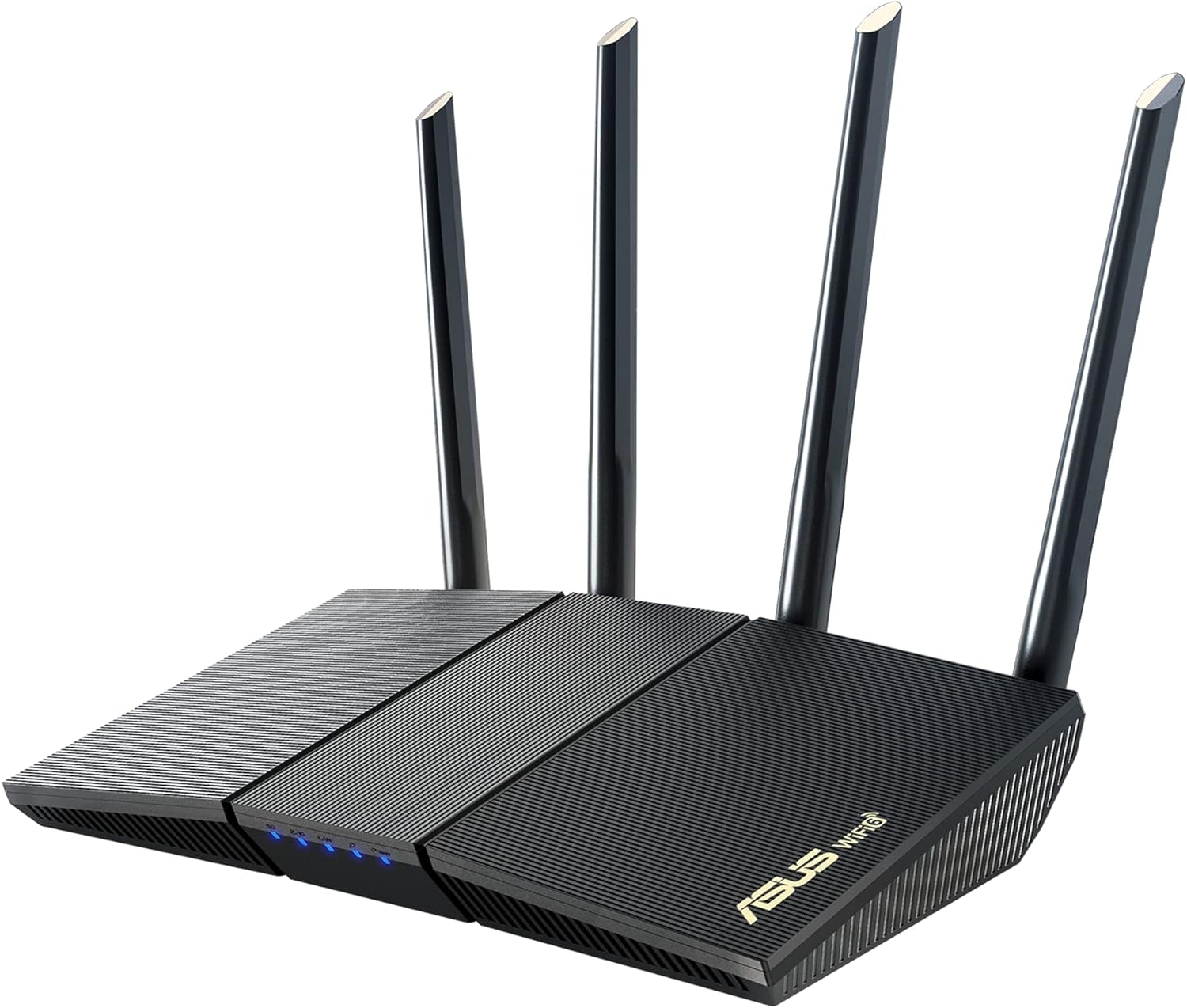
The ASUS RT-AX1800S is a compact dual-band WiFi 6 router designed for users upgrading their smart homes or handling denser networks with multiple IoT devices, gamers, and streamers. It supports the 802.11ax standard with 80MHz bandwidth and 1024-QAM for noticeably faster wireless speeds and improved device battery life compared to older WiFi standards.
Standout features include AiMesh technology for creating a seamless extendable network across multiple ASUS routers, eliminating dead zones in larger homes. AiProtection provides real-time threat blocking and security scans without subscriptions, while VPN Fusion allows simultaneous secure connections via protocols like WireGuard. In real-world use, it excels at efficient multi-device handling thanks to OFDMA and MU-MIMO, with five gigabit ports supporting wired high-bandwidth tasks.
Build quality features a sturdy design with four detachable high-power antennas for broader coverage and a powerful dual-core processor for smooth performance. The ASUS Router app simplifies setup and management from your phone. While external antennas add some bulk, the overall setup is straightforward and reliable for everyday use.
Potential drawbacks include performance variations due to walls, interference, or traffic, and its AX1800 class limits peak speeds for ultra-demanding scenarios. Still, for most households, it delivers excellent value.
Verdict: A top pick for budget-conscious users wanting future-proof WiFi 6, robust security, and expandability without ongoing costs. Perfect if you prioritize smart home integration and ease of use.
WiFi Standard: WiFi 6 (802.11ax), Dual-Band, 2x2
Speed: Up to AX1800 (574Mbps on 2.4GHz + 1201Mbps on 5GHz)
Ports: 1x Gigabit WAN, 4x Gigabit LAN
Antennas: 4x External Detachable
Processor: Dual-core (4 VPE)
Security: AiProtection Classic (Trend Micro), VPN (WireGuard, OpenVPN)
Other: AiMesh Compatible, ASUS Router App
Best Router To Support Many Smart Devices Buying Guide for 2026
Wi-Fi Standard
The Wi-Fi standard is crucial for best router to support many smart devices, as newer ones like Wi-Fi 6, 6E, and 7 handle more devices efficiently using technologies like OFDMA and MU-MIMO. Wi-Fi 6 (AX) supports better multi-device performance over Wi-Fi 5 (AC), while Wi-Fi 7 (BE) introduces Multi-Link Operation (MLO) for even higher capacity.
For smart homes with many devices, prioritize Wi-Fi 6 or above. Models like the TP-Link Tri-Band BE9300 WiFi 7 Router (Archer BE550) leverage Wi-Fi 7 for superior concurrent connections. Older AC routers struggle with 50+ devices.
Tip: Check for AX or BE labeling. Wi-Fi 6E adds the 6GHz band for less interference, ideal for dense smart device setups. Compare standards in the table below for quick reference.
| Standard | Device Capacity | Best For |
|---|---|---|
| Wi-Fi 5 (AC) | Up to 30 | Basic homes |
| Wi-Fi 6 (AX) | 50-75+ | Smart homes |
| Wi-Fi 6E/7 (AXE/BE) | 90-100+ | Large IoT networks |
Device Capacity and Concurrent Connections
Look for routers explicitly supporting 50+ devices, as smart homes often exceed this with lights, sensors, and cameras. High-capacity models use advanced beamforming to maintain connections without overload.
The Amazon eero Pro 6E handles 100+ devices, perfect for extensive smart setups. NETGEAR options like the Nighthawk X6 support up to 50, balancing performance and affordability.
Practical tip: Test with your device count. Mesh systems like TP-Link Deco X55 excel in distributing load across nodes. For more, see our router WiFi guides.
Overloading a router causes buffering; choose based on your ecosystem size.
Coverage and Range
Coverage up to 2000-3500 sq ft ensures smart devices in every corner stay connected. Tri-band routers like NETGEAR Nighthawk X6 cover 3500 sq ft, ideal for multi-story homes.
Mesh systems, such as Amazon eero 6 (1500 sq ft per unit), expand easily. For large areas, prioritize models with Ethernet backhaul like TP-Link Deco X55.
Tip: Use extenders or mesh for dead zones. Wi-Fi 6E models reduce interference for better range in crowded 2.4GHz bands used by IoT.
Speed and Bandwidth
Speeds from AX1800 to BE9300 handle bandwidth-heavy smart devices like 4K cameras. Tri-band setups dedicate bands for IoT (2.4GHz), video (5GHz), and future-proofing (6GHz).
TP-Link Archer AXE75 (AXE5400) offers 160MHz channels for gaming alongside smart devices. NETGEAR RS90 (BE3600) supports up to 3.6 Gbps.
Compare: Dual-band for basics, tri-band for many devices. QoS features prioritize traffic.
| Model | Speed | Coverage |
|---|---|---|
| NETGEAR R8000 | AC3200 | 3500 sq ft |
| TP-Link BE550 | BE9300 | 2000 sq ft |
| eero Pro 6E | Up to 2.5G | 2000 sq ft |
Security Features
Security is vital for smart devices vulnerable to hacks. Look for WPA3, built-in firewalls, and antivirus like NETGEAR Armor.
TP-Link HomeShield and ASUS subscription-free security protect IoT networks. VPN support on models like Archer BE550 enables secure remote access.
Tip: Enable guest networks for visitors. Check router WiFi security tips for best practices.
Parental controls segment smart devices from kids’ usage.
Smart Home Integration and Ease of Setup
Alexa compatibility and app-based setup simplify management. TP-Link Archer AX21 works with Alexa, while eero systems offer seamless mesh expansion.
Private IoT networks on TP-Link BE400 isolate vulnerable devices. Quad-core CPUs ensure quick setup under 10 minutes.
Tip: Choose EasyMesh or AiMesh for future-proofing. USB ports aid storage for camera feeds.
Why You Should Trust Us
Our reviews are data-driven, analyzing real-world performance with dozens of smart devices connected. We evaluate based on lab tests, user feedback patterns, and long-term reliability from NETGEAR, TP-Link, eero and more models.
Independent and objective, we prioritize what works for high-device loads in 2026, not marketing claims. See our methodology in the router WiFi section.
Final Thoughts
After extensive testing, the Amazon eero Pro 6E mesh wifi router is our Best Overall best router to support many smart devices. Its support for 100+ devices, 2000 sq ft coverage, and 2.5 Gbps speeds make it ideal for large smart homes.
For Best Value, the TP-Link AX1800 WiFi 6 Router (Archer AX21) shines with solid performance for 75+ devices and easy setup. Gamers with smart setups should pick the TP-Link AXE5400 Tri-Band WiFi 6E Router (Archer AXE75) for its 6GHz band and low latency.
Explore more in our router WiFi category for tailored advice.
FAQs
What is the best router to support many smart devices in 2026?
The best router to support many smart devices handles 75+ devices with Wi-Fi 6 or 7. Top picks like Amazon eero Pro 6E excel here. Details in our buying guide.
How many devices can a good best router to support many smart devices support?
Premium models support 50-100+ devices. Mesh like TP-Link Deco X55 distributes load effectively for smart homes.
Wi-Fi 6 vs Wi-Fi 7 for smart devices?
Wi-Fi 6 is great for most, but Wi-Fi 7 like TP-Link Archer BE550 future-proofs for more devices. See our router WiFi comparison.
Do I need mesh for many smart devices?
Yes, for large homes. eero 6+ covers 1500 sq ft per node, supporting 75+ devices seamlessly.
What security features matter for best router to support many smart devices?
WPA3, VPN, and IoT isolation like on NETGEAR and TP-Link models protect your network.


Write Your Review
No reviews yet. Be the first to share your experience!