

Wireless audio has transformed how we enjoy music at home, in the office, and on the go. Connecting Bluetooth speakers should be straightforward, yet many users struggle with pairing issues, dropped connections, and audio quality problems. Whether you’re setting up a new JBL Flip 6, Sony SRS-XB13, or UE Boom 3, understanding the proper connection process makes all the difference between frustration and seamless listening.
This guide walks you through every step of connecting Bluetooth speakers to your devices, from initial pairing to advanced troubleshooting. You’ll learn why connections fail, how to fix them quickly, and how to maintain optimal audio performance across all your gadgets.

Pros
- True 5.1 Dolby Atmos with under 0.5ms latency for theater-like sync
- VoiceMX isolates speech for easy following in action scenes
- Powerful 6-driver system plus subwoofer for room-filling dynamics
- Quick setup under 1 minute and app-based fine-tuning
- Bluetooth 5.4 resists interference for reliable wireless use
Cons
- Wired subwoofer restricts flexible placement options
- Full EQ customization requires downloading the Ultimea app
- Best Atmos performance needs HDMI eARC-compatible TV
The ULTIMEA Poseidon M60 is a compact 5.1-channel soundbar system with a dedicated wired subwoofer, designed for anyone upgrading their TV audio to cinematic levels without complex installations. Ideal for smart TV owners seeking immersive surround sound on a budget, it uses five built-in speakers including side-firing drivers to create wide 4D Dolby Atmos effects, skipping the need for rear satellites.
Standout features like VoiceMX employ DSP to sharpen dialogue amid chaos, while BassMX drives the subwoofer's 18mm excursion for punchy lows down to 45Hz. In real-world use, the 300W output fills medium rooms with detail-rich sound, from whispers to explosions, and HDMI eARC unlocks lossless audio with minimal latency. The app adds personalization through EQ presets and surround tweaks, enhancing versatility for movies, gaming, or music.
Build quality impresses with precision-tuned drivers in a sleek bar and sturdy wooden sub cabinet. Bluetooth 5.4 ensures stable streaming, though the wired sub limits positioning freedom. Minor drawbacks include app reliance for advanced controls and eARC needs for peak performance.
Overall, the Poseidon M60 delivers premium home theater value, earning high marks for simplicity and impact. Buy it if you want pro-level sound without the hassle.
Audio: 5.1CH Dolby Atmos, 300W peak power, 45Hz-18kHz frequency, 99dB max SPL.
Connectivity: HDMI eARC, Bluetooth 5.4, Optical, AUX, USB.
Drivers: 5 full-range + 18mm subwoofer driver in 5.3L wooden cabinet.
Controls: Ultimea app with 10-band EQ, 121 presets, OTA updates.
Setup: Less than 1 minute, no rear speakers required.

Pros
- Compact all-in-one design with built-in subwoofers for easy setup
- Wireless Dolby Atmos delivers true height effects and surround immersion
- Smart features like voice assistants and adaptive audio enhance everyday use
- Game Mode Pro syncs automatically for responsive gaming audio
- SpaceFit Sound Pro ensures balanced sound in any room
Cons
- Q-Symphony and some optimizations require compatible Samsung TVs
- Built-in subwoofers may not match dedicated external bass for audiophiles
- Limited compatibility details for non-Samsung TVs and devices
The Samsung S60D 5.0ch soundbar is an all-in-one audio solution designed for users wanting immersive sound without complex setups, especially those with compatible Samsung TVs. It targets movie lovers, gamers, and smart home enthusiasts seeking compact, powerful performance in a single unit.
Standout features like Wireless Dolby Atmos provide elevated audio from above and around, while Q-Symphony combines TV and soundbar speakers for deeper immersion. Adaptive Sound and AVA analyze content in real-time to amplify dialogue, making movies and sports crystal clear. Game Mode Pro activates automatically with strong up-firing speakers for precise 3D gaming audio on consoles like PS5 or Xbox.
Its sleek, compact build with built-in subwoofers delivers rich bass without extra components, and SpaceFit Sound Pro calibrates output to your room for balanced playback. Smart integration with Alexa, AirPlay 2, and Chromecast allows seamless voice control and streaming.
Potential drawbacks include reliance on specific Samsung TVs for peak Q-Symphony performance and built-in woofers that might lack the punch of separate subs for bass-heavy content.
Overall, the S60D excels as a versatile, user-friendly soundbar for modern living rooms, earning high marks for innovation and convenience in delivering pro-level audio.
All-in-One Design: 5-channel audio with built-in subwoofers for deep bass and easy placement.
Wireless Dolby Atmos: Height and surround effects without cables.
Q-Symphony & SpaceFit Pro: TV-synced sound and room calibration.
Adaptive Sound & AVA: Optimized dialogue and noise reduction.
Game Mode Pro: 3D gaming audio with auto-activation.
Smart Integration: Alexa, Chromecast, AirPlay 2 built-in.

Pros
- Effortless HDMI eARC/ARC setup keeps audio in perfect sync
- Compact size blends into any entertainment setup
- Versatile compatibility with Fire TV, smart TVs, and streaming devices
- Bluetooth connectivity for easy music streaming
- Sustainable build using 18% recycled materials
Cons
- 2.0-channel design lacks a dedicated subwoofer for ultra-deep bass
- Performance best with compatible TVs; may need adapters otherwise
- No built-in voice assistant or advanced streaming options
The Amazon Fire TV Soundbar is a compact 2.0-channel audio upgrade designed for Fire TV users and anyone with a smart TV seeking better sound without complexity. It targets casual viewers who want enhanced dialogue clarity, fuller audio, and virtual surround effects in a space-saving form factor.
Standout features include DTS Virtual:X for immersive 3D sound and Dolby Audio for detailed playback, delivered through dual speakers that punch above their size with deeper bass and crisp vocals. Real-world performance shines in movies and shows, syncing effortlessly via HDMI eARC/ARC, and Bluetooth adds versatility for music playback from mobile devices.
Build quality emphasizes a slim 24-inch by 2.5-inch profile that fits most stands, plus sustainability with 18% recycled materials. It integrates seamlessly with Fire TV for single-remote control and works broadly with smart TVs.
Drawbacks include limited bass depth without a subwoofer and reliance on HDMI ports, which might require checking TV compatibility. Overall, it delivers strong value for easy, immersive upgrades.
Verdict: A smart pick for budget-conscious users elevating TV audio simply and effectively.
Audio Technologies: DTS Virtual:X, Dolby Audio
Channels: 2.0
Connectivity: HDMI eARC/ARC, Bluetooth
Dimensions: 24 inches long, 2.5 inches high
Compatibility: Fire TV, smart TVs, streaming players
Sustainability: 18% recycled materials (excludes power adapter and cable)
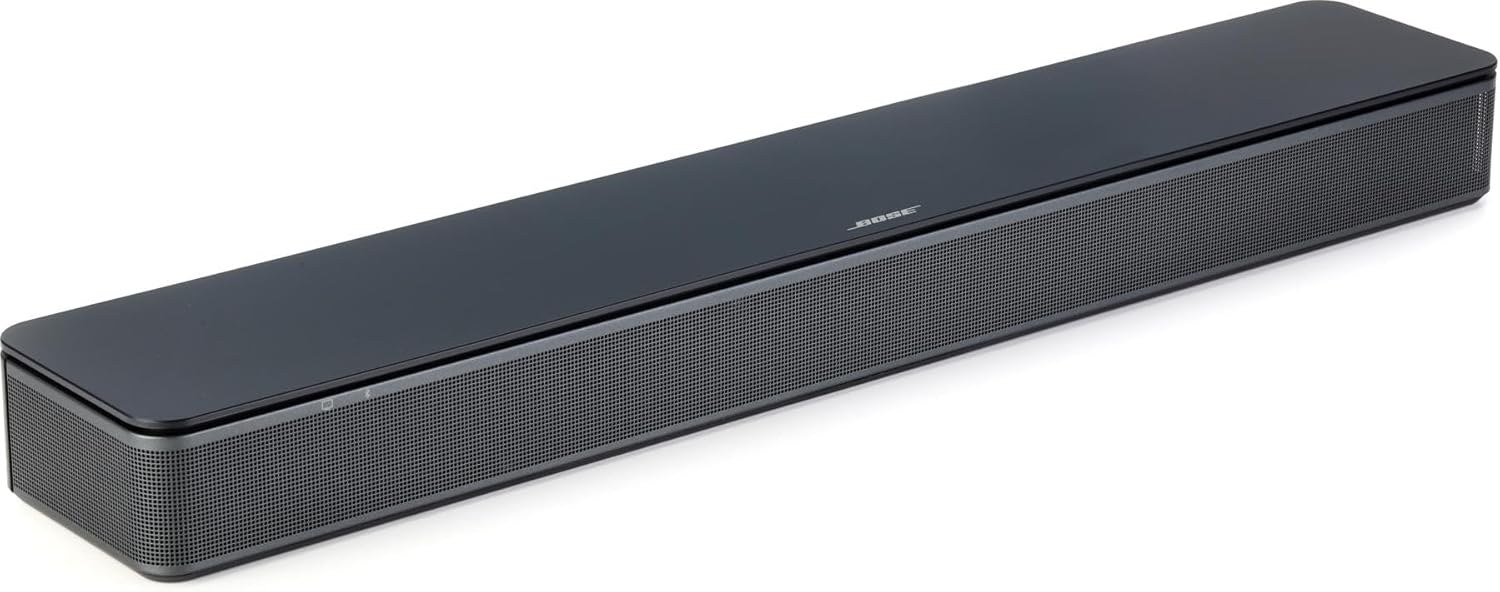
Pros
- Exceptional speech clarity for better TV viewing
- Ultra-compact size fits anywhere without blocking remote sensor
- Bluetooth pairs quickly for versatile music playback
- Simple one-cable setup with included optical cable
- Remote enables quick dialogue and bass adjustments
Cons
- HDMI cable sold separately for ARC connection
- Bass is basic without adding a separate subwoofer
- Limited inputs may restrict multi-device setups
The Bose TV Speaker is a compact all-in-one soundbar designed for anyone frustrated with muffled TV audio, especially dialogue in shows and movies. It targets casual viewers who want clearer speech and improved sound without bulky equipment or complex installations. With its focus on simplicity, it connects via a single optical cable (included) or HDMI, making it ideal for bedrooms, offices, or small living spaces.
Standout features include two angled full-range drivers for spacious audio, a center tweeter elevating vocals, and a dialogue mode that analyzes content to boost speech clarity. Built-in Dolby decoding adds realism, while Bluetooth lets you stream music or podcasts effortlessly. In real-world use, it transforms unclear TV sound into crisp, natural listening, with the remote's bass button providing extra depth for action scenes.
Build quality feels premium yet understated, at just over 2 inches tall and under 24 inches wide, with LED indicators for easy feedback. It mounts easily (brackets separate) and uses HDMI-CEC to power on with your TV, responding to its remote for volume. Durability matches Bose standards, handling daily use without issues.
Drawbacks include needing a separate HDMI cable for ARC and fuller bass requiring an optional subwoofer like the Bose Bass Module 500. It lacks advanced surround features, suiting basic upgrades over audiophile setups.
Overall, the Bose TV Speaker delivers reliable, speech-focused audio enhancement that punches above its size. Buy it if TV clarity is your priority; it excels there with minimal hassle.
Compact design: 2.21" H x 23.38" W x 4.02" D, fits in front of any TV.
Connections: Optical (included), HDMI-ARC (cable separate), AUX in.
Wireless: Bluetooth for up to 3 devices, auto-connects first powered-on.
Controls: Remote with dialogue mode, bass boost; HDMI-CEC for TV sync.
Expandable: Compatible with Bose Bass Module 500/700 (cable separate).

Pros
- Versatile detachable 2-in-1 design with four placement options
- Multiple connectivity choices including ARC for direct TV remote use
- Three customizable EQ modes for optimized audio per content type
- Auto volume boost enhances weak sounds without distortion
- Compact build suitable for TVs, PCs, gaming, and projectors
Cons
- No dedicated subwoofer, with bass focused on balanced rather than deep performance
- Remote battery not included per Amazon policy
- Optimal sound may require TV audio output tweaks like PCM/stereo selection
The Assistrust 80W soundbar is a 2-in-1 detachable audio solution designed for smart TVs, PCs, gaming consoles, and projectors. It splits into two compact units for customizable placement, making it perfect for users wanting upgraded sound without complex installations or high costs. Ideal for apartments or small rooms where space and versatility matter.
Standout features include auto volume boost that amplifies faint dialogues and effects for immersive movie nights or gaming sessions, powered by four drivers delivering stereo sound with emphasis on crisp highs and mids. Three EQ modes (movie, music, news) let you fine-tune for cinematic depth, melodic richness, or clear vocals, while connections like Bluetooth 5.0, ARC (with TV remote control), OPT, and AUX ensure broad compatibility and easy setup.
Build quality feels solid with a sleek design supporting horizontal, vertical, tabletop, or wall-mount use for even audio spread. Real-world performance shines in transforming flat TV speakers into dynamic output, though bass remains balanced rather than booming without a subwoofer.
Drawbacks include the lack of deep bass for bass-heavy genres and occasional need for TV setting adjustments like selecting PCM audio format. Overall, it offers excellent value for everyday enhancement.
Verdict: Highly recommended for budget-conscious TV owners seeking flexible, feature-packed audio upgrade with reliable support.
Audio Output: 80W, 2.0CH Stereo
Drivers: 4 high-performance drivers, 2 bass diaphragms
Bass: Balanced bass (no subwoofer)
EQ Modes: 3 (Movie, Music, News)
Connectivity: Bluetooth 5.0, ARC, OPT, AUX
Control: TV remote via ARC
Power: 110V-240V; Quick TV setup required
Support: 18-month warranty, 24/7 US-based
Best For: Smart TV users needing versatile sound without subwoofer bulk. Great for movies, music, news on TVs/PC/projectors.
Setup Tips: Use ARC port for TV remote control; select PCM/stereo on TV; pair Bluetooth via BT button. Watch included video tutorials.
Placement: Horizontal for clear audio, vertical/wall for immersive spread, tabletop for vibrancy.
Common Fixes: No sound? Check TV output to soundbar. Connection issues? Use dedicated ARC/OPT ports.

Pros
- True Dolby Atmos immersion at an accessible price point with multiple up-firing drivers
- Wireless subwoofer eliminates cable management headaches and offers flexible room placement
- Exceptional dialogue clarity through proprietary Clear Voice technology
- Comprehensive streaming options with stable Wi-Fi and built-in Alexa voice control
- Expandable ecosystem allows gradual upgrades without replacing the entire system
Cons
- 3.8/5 star rating suggests some users experienced setup or compatibility issues
- HDMI eARC cable sold separately, adding to initial setup costs
- Wireless surrounds sold separately, requiring additional investment for full surround experience
The Yamaha True X Bar 50A is a mid-range soundbar designed for home theater enthusiasts who want cinematic Dolby Atmos sound without the complexity of traditional surround systems. It combines a slim soundbar with a wireless subwoofer, delivering 280 watts of audio power. This system is ideal for anyone upgrading from their TV's built-in speakers or looking to add immersive audio to a living room, bedroom, or entertainment space.
What sets the 50A apart is its implementation of Dolby Atmos technology with up-firing drivers that create genuine height effects, making movies, shows, and music feel spacious and enveloping. The dual subwoofers built into the bar, combined with the included wireless subwoofer, produce impactful bass that enhances everything from action sequences to music streaming. Yamaha's Clear Voice technology ensures dialogue remains crisp and intelligible, so you never miss plot points even during complex scenes. The 33-foot wireless range on the subwoofer provides genuine flexibility in room placement.
Streaming capabilities are comprehensive. Built-in Wi-Fi enables high-quality playback via Spotify Connect, AirPlay 2, and TIDAL Connect, while Bluetooth handles any other source. Built-in Alexa voice control allows hands-free Amazon Music streaming and smart home integration. The system connects easily to any TV via optical cable or HDMI eARC (cable sold separately), with control available through your TV remote, the included remote, or a free mobile app. The sleek, low-profile design works equally well wall-mounted or placed on furniture.
The expandable surround system deserves mention. You can add two True X Speaker 1A wireless speakers (sold separately) for true surround sound, and these speakers intelligently switch between Surround and Solo mode, functioning as portable Bluetooth speakers when not in use. This modular approach lets you upgrade gradually rather than committing to a full system upfront. However, building a complete surround setup requires additional purchases beyond the base soundbar and subwoofer.
While the system delivers strong performance for its price range, the 3.8/5 star rating indicates some users encountered compatibility or setup challenges. The need to purchase the HDMI eARC cable separately and the optional nature of surrounds means total investment can escalate. For buyers seeking genuine Dolby Atmos immersion with wireless convenience and streaming flexibility at a reasonable price, the True X Bar 50A represents solid value. It excels at dialogue clarity and bass impact, making it particularly suited for movie and TV enthusiasts.
Audio Performance: 280 watts output power, Dolby Atmos, Dolby TrueHD, DD 7.1 Plus, Hi-Res Audio support, Bass Boost technology
Physical Dimensions: Soundbar 40 inches wide x 2.5 inches tall x 4.38 inches deep, weighs 29.2 pounds total; Subwoofer 6.3 inches diameter
Connectivity: HDMI eARC, optical cable, Wi-Fi, Bluetooth (10-meter range), built-in Alexa microphone with on/off button
Streaming Services: Spotify Connect, AirPlay 2, TIDAL Connect, Amazon Music via Alexa, Bluetooth audio
Control Options: Included remote control, free mobile app, TV remote (HDMI eARC compatible TVs), voice commands via Alexa
Design: Slim, low-profile with cloth and plastic enclosure, wall-mount keyholes, available in Black
Warranty: 2-year manufacturer limited warranty
Included Accessories: Wireless subwoofer, remote control, optical cable, power cords
Is This Soundbar Right for You? The Yamaha True X Bar 50A works best for living rooms, bedrooms, and entertainment spaces where you want genuine Dolby Atmos immersion without installing a complex multi-speaker system. It's ideal if you stream music frequently and want one device handling both movies and audio content. Choose this if you value dialogue clarity and wireless convenience over ultra-compact design.
Setup Considerations: Plan to purchase an HDMI eARC cable separately if connecting to a compatible TV for optimal performance. The wireless subwoofer needs power outlet access within 33 feet of the soundbar. Initial setup typically takes 15-30 minutes. Download the Yamaha app for easiest control and firmware updates.
Upgrade Path: Start with the soundbar and subwoofer, then add True X Speaker 1A wireless speakers later if you want surround sound. This modular approach spreads costs over time while letting you evaluate whether surrounds enhance your specific room and listening habits.
Comparison Factors: Compare against other mid-range Dolby Atmos soundbars by checking woofer sizes (this has a 6.3-inch subwoofer), total wattage output (280W here), and streaming service compatibility. The True X Bar 50A prioritizes dialogue clarity and wireless convenience, making it stronger for TV watching than pure music listening compared to some competitors.
Common Questions: Can you add surrounds later? Yes, the True X Speaker 1A wireless speakers work seamlessly. Does it work with non-eARC TVs? Yes, use the optical cable connection. Can you disable Alexa? Yes, there's a dedicated mic on/off button. Is the subwoofer truly wireless? Yes, it connects via Wi-Fi and needs only a power outlet.
Getting Started: Understanding Bluetooth Speaker Connectivity
Bluetooth technology operates on the 2.4 GHz frequency band, the same spectrum used by Wi-Fi routers and microwaves. This shared bandwidth sometimes causes interference, but modern Bluetooth speakers are designed to handle these challenges. Before you connect Bluetooth speakers, it helps to understand how the pairing process works and what factors affect connection stability.
Most Bluetooth speakers enter pairing mode automatically when powered on for the first time. Your phone, tablet, or computer then detects the speaker and establishes a secure connection. Once paired, the devices remember each other, allowing for faster reconnection in future sessions.
Step-by-Step Guide: How to Connect Bluetooth Speakers Properly
Step 1 – Preparation & What You Need
Before attempting to connect Bluetooth speakers, gather the essentials. You’ll need the speaker itself, a fully charged device (smartphone, tablet, or computer), and ideally the speaker’s manual for model-specific instructions. Check that your source device has Bluetooth enabled and is within 30 feet of the speaker for optimal range.
Ensure the speaker battery isn’t critically low, as some models won’t enter pairing mode without sufficient power. Clear any obstructions between your device and the speaker, and temporarily disable Wi-Fi on your phone if you experience repeated connection failures. This eliminates potential interference from nearby networks.
Step 2 – Device Setup & Pairing
Power on your Bluetooth speaker and look for a dedicated pairing button or hold the power button for 3-5 seconds. Most speakers like the Beats Pill or Anker Soundcore indicate pairing mode with flashing LED lights, typically blue or white. Some models announce “pairing mode” through voice prompts, making the process unmistakable.
On your source device, navigate to Bluetooth settings and scan for available devices. Your speaker should appear in the list within seconds. Tap or select the speaker name to initiate pairing, and wait for a confirmation message indicating successful connection.
Some speakers require entering a PIN code, typically 0000 or 1234, which appears in your device’s pairing dialog. Enter this code and confirm to complete the initial pairing. Once successful, your device remembers the speaker, and future connections happen automatically when both devices are powered on and in range.
Step 3 – Configuration for Optimal Audio
After successfully connecting your Bluetooth speaker, check audio settings on your source device. Ensure the speaker is set as the default audio output device, not your phone’s internal speakers. On iOS, this appears in Control Center; on Android, check Settings > Sound & Vibration.
Adjust volume levels on both your device and the speaker itself. Starting at 50% on each allows you to find the sweet spot without audio distortion or sudden loud bursts. Many premium speakers like the Bose SoundLink Revolve include companion apps that provide additional EQ controls and firmware updates for improved performance.
Test audio playback with different apps and content types. Streaming music, podcasts, and video audio may respond differently depending on app settings and Bluetooth codec support. If your speaker supports aptX or LDAC codecs, enable these in your device settings for higher-quality audio transmission.
Step 4 – Troubleshooting Common Connection Issues
If your Bluetooth speaker won’t connect, start by restarting both devices completely. Power off the speaker, wait 30 seconds, and turn it back on. Simultaneously, toggle Bluetooth off and on in your device’s settings, then attempt pairing again.
For persistent connection problems, forget the device from your Bluetooth list and re-pair from scratch. On most phones, this involves holding down the speaker name in Bluetooth settings and selecting “Forget” or “Unpair.” This clears any corrupted pairing data that might cause reconnection failures.
If audio cuts out frequently, move closer to the speaker to test signal strength. Walls, metal objects, and other electronic devices can weaken Bluetooth signals. Check for software updates for both your speaker and source device, as manufacturers regularly release patches that improve connection stability.
Connecting Multiple Devices to Your Bluetooth Speaker
Most modern Bluetooth speakers support multi-device pairing, allowing you to connect your phone, tablet, and laptop simultaneously. However, only one device can stream audio at a time. When you play music on a different device, the speaker automatically switches the connection, disconnecting from the previous source.
To add a second device while keeping the first paired, put the speaker back into pairing mode. On speakers like the Ultimate Ears UE Boom or JBL Charge 5, this typically requires holding the Bluetooth button for several seconds. Your new device will discover the speaker and pair just as it did the first time.
Some speakers limit multi-device pairing to 2-3 devices maximum. If you exceed this limit, you’ll need to remove older pairings before adding new ones. Check your speaker’s manual for the specific number of devices it supports and how to manage paired device lists.
FAQs About Connecting Bluetooth Speakers
Why Does My Bluetooth Speaker Keep Disconnecting?
Frequent disconnections usually stem from three sources: interference from nearby Wi-Fi networks, low battery levels, or outdated Bluetooth firmware. Start by moving away from your router and ensuring your speaker battery is above 20%. Many speakers perform poorly when power is critically low, causing automatic disconnections as a power-saving measure.
If problems persist, check for firmware updates through the speaker’s companion app. Manufacturers like Sony, Bose, and JBL regularly release updates that patch connection stability issues. Resetting the speaker to factory settings often resolves stubborn disconnection problems, though this erases all paired devices.
Can I Connect My Bluetooth Speaker to Multiple Devices Simultaneously?
Yes, most Bluetooth speakers allow pairing with multiple devices, but they can only play audio from one source at a time. Your speaker maintains a memory of all paired devices and automatically switches connections when you start playing audio on a different device. This flexibility makes it easy to share a speaker among family members or switch between work and personal devices.
The pairing process for additional devices is identical to the first connection. Simply put the speaker into pairing mode and connect your second device through its Bluetooth settings. Most speakers display the number of paired devices in their settings menu or app interface.
What Are the Hardware and Software Requirements for Connecting Bluetooth Speakers?
Your source device needs Bluetooth 4.0 or newer for optimal compatibility with modern speakers. Nearly all smartphones, tablets, and computers manufactured in the last five years meet this requirement. Older devices with Bluetooth 3.0 may work but could experience connection instability or reduced range.
On the software side, ensure your device runs a current operating system. iOS 12 and later, Android 6.0 and later, and Windows 10 and later all provide robust Bluetooth support. Outdated operating systems sometimes lack proper Bluetooth codec support, limiting audio quality and connection reliability when you connect Bluetooth speakers.
Advanced Tips for Better Bluetooth Speaker Performance
To maximize audio quality when you connect Bluetooth speakers, keep your source device’s Bluetooth and Wi-Fi antennas away from metal objects and water. Position yourself within 20 feet of the speaker whenever possible, as Bluetooth’s theoretical 30-foot range assumes open space without obstacles. In real-world environments, walls and interference reduce effective range significantly.
Disable Bluetooth on devices you’re not actively using. If your phone, tablet, and smartwatch all have Bluetooth enabled, they may compete for connection priority. Your speaker might attempt to connect to the wrong device or struggle to maintain a stable link. Selective Bluetooth management prevents these conflicts and improves connection reliability.
For the best sound quality, use speakers with aptX HD or LDAC codec support, such as the Sony SRS-XB43 or Technics EAH-AZ80. These advanced codecs transmit higher-bitrate audio over Bluetooth, approaching wired headphone quality. However, both your speaker and source device must support the same codec for these benefits to apply.
Final Thoughts on Connecting Bluetooth Speakers Successfully
Learning how to connect Bluetooth speakers properly eliminates the frustration that plagues many wireless audio users. By following the preparation, pairing, and configuration steps outlined in this guide, you’ll establish reliable connections that last. Whether you’re using budget-friendly options like the JBL Go 3 or premium models like the Bose SoundLink Max, the fundamental connection process remains consistent and straightforward.
Remember that most connection problems arise from simple oversights like low battery levels, interference, or outdated firmware. Before assuming hardware failure, work through the troubleshooting steps systematically. In the vast majority of cases, you’ll restore a working connection within minutes.
With these techniques in your arsenal, you’re equipped to connect Bluetooth speakers confidently and maintain optimal audio performance across all your devices. Enjoy your wireless listening experience without the technical headaches that once made Bluetooth connectivity a challenge.


Write Your Review
No reviews yet. Be the first to share your experience!