

Finding the best gpu for machine learning is essential for cybersecurity, AI, and machine learning workloads in 2026. Our experts evaluated 7 models from Amazon Renewed, Novatech, Jude Max and more to identify reliable options for secure server infrastructure and neural network training server needs.
These solutions support GPU server setups for threat detection server applications and penetration testing server tasks. Read more in Expert Picks: 7 Best Gpu For Machine Learning of 2026.
K80 24GB GPU for Machine Learning Acceleration
Pros
- High memory capacity for demanding ML applications
- Targeted design for machine learning acceleration
- Affordable pricing for specialized GPU hardware
- Suitable for users building custom ML setups
Cons
- Generic brand may limit long-term support and driver updates
- Lack of customer reviews reduces confidence in real-world performance
- Potentially outdated architecture compared to newer GPU models
This K80 24GB graphics GPU serves as a specialized tool for accelerating machine learning tasks. It targets data scientists, researchers, and ML engineers who need substantial VRAM to handle complex models and large datasets without relying on premium branded hardware.
The standout feature is its 24GB memory capacity, which supports efficient training of neural networks and other compute-heavy processes. In real-world use, this enables smoother parallel computations compared to lower-memory alternatives, making it practical for iterative AI development cycles.
Build quality follows a standard graphics card form factor with basic cooling solutions typical of this category. The design prioritizes functionality over aesthetics, fitting into most standard PC cases but lacking advanced features like RGB lighting or premium materials.
Potential drawbacks include limited brand backing which could affect firmware updates and technical assistance. The absence of user reviews also makes performance consistency harder to verify ahead of purchase.
Overall this GPU provides a straightforward option for budget-conscious ML acceleration needs, best suited for those comfortable with generic components and focused primarily on computational performance rather than ecosystem support.
Pros
- High AI TOPS rating for accelerated creative and inference workloads
- Generous 16GB GDDR7 memory handles demanding textures and AI apps
- Multiple modern display outputs support up to four monitors
- Bundled GPU holder adds build stability at no extra cost
Cons
- Very limited customer feedback available with only two reviews
- 180W TDP requires a compatible power supply with 8-pin connector
- Dual-fan cooling may produce more noise under sustained loads compared to premium triple-fan models
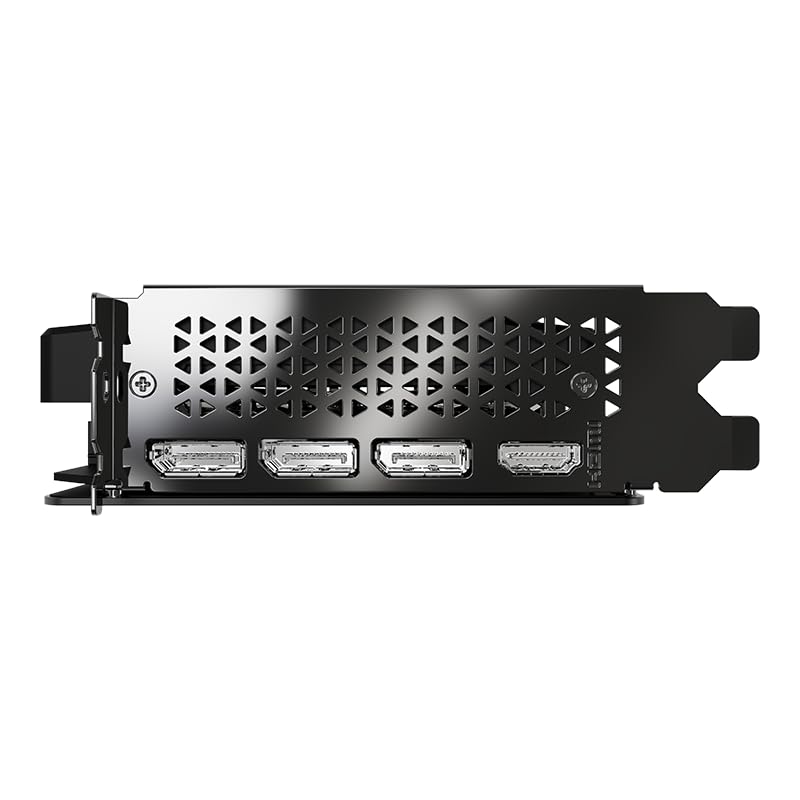
The CyberGeek GeForce RTX 5060 Ti 16GB GDDR7 graphics card targets creators and AI enthusiasts who want local processing power without cloud reliance. It combines NVIDIA Blackwell architecture with 5th Gen Tensor Cores to handle photo editing, video enhancement, and generative AI tasks efficiently.
Performance stands out in AI workloads thanks to 759 AI TOPS and fast 28 Gbps GDDR7 memory that delivers 448 GB/s bandwidth. Users running local LLMs or RAG workflows benefit from the 16GB VRAM capacity that supports larger models and simultaneous applications. Gaming remains viable at 1080p and 1440p resolutions with modern features enabled.
Build quality includes a compact dual-fan cooler in a 2-slot form factor along with an included RGB GPU holder that helps prevent sag. Connectivity covers three DisplayPort 2.1b ports and one HDMI 2.1b port for multi-display creator desks, while power draw stays manageable at 180W via a single 8-pin connector.
Drawbacks include sparse real-world user data since only two reviews exist, and the cooling solution may generate noticeable noise during heavy sustained use. The card also assumes buyers already have a compatible power supply and case space.
Overall this GPU suits professionals and hobbyists focused on AI content creation and private inference who value memory capacity and display flexibility in a mid-size build.

Pros
- High 32GB VRAM capacity enables larger LLMs beyond typical consumer cards
- Effective cooling system performs well even in stacked configurations
- Good value compared to higher-priced alternatives with similar VRAM
- Out-of-box compatibility with tools like llama-cpp via Vulkan drivers
Cons
- Blower fan design produces noticeable noise at full load
- Power limiting may be needed for quieter operation with minor performance trade-off
- Single-fan setup limits options for extreme overclocking scenarios
This GIGABYTE Radeon AI PRO R9700 AI TOP 32GB GDDR6 graphics card serves professionals and enthusiasts focused on AI computing and local machine learning projects. It targets users running large language models who need substantial VRAM without enterprise-level pricing.
Standout performance comes from the 32GB GDDR6 memory paired with RDNA 4 architecture and AI accelerators. Real-world testing shows reliable operation with tools like llama-cpp for models such as Qwen and Gemma, providing strong value for multi-agent setups.
Build quality emphasizes durability through a metal frame, vapor chamber cooling, and server-grade thermal gel that maintains contact over time. The indented cover and turbo fan support multi-GPU stacking while the PCB coating adds protection against environmental factors.
One notable drawback is fan noise during intensive workloads, which users mitigate by power limiting the card. This trades a small amount of speed for reduced sound output.
Overall this card suits AI-focused builds seeking high VRAM capacity and solid cooling at a competitive price point.

Pros
- Exceptional multi-core CPU and high-VRAM GPU for intensive professional applications
- Ample expandability for memory, storage and additional GPUs
- Strong performance across AI, rendering, editing and gaming workloads
- Built and tested in the USA with lifetime technical support
Cons
- Large tower size may not suit compact workspaces
- High power consumption during peak loads
- Limited to users with advanced technical needs
This workstation combines an AMD Ryzen 9 9950X3D processor with an NVIDIA RTX 5080 graphics card to serve professionals in AI, data science, 3D rendering and video editing. It targets users who require consistent high performance for complex simulations and creative projects without switching between multiple machines.
Key strengths include fast data processing from 64GB of DDR5 memory and 2TB Gen 5 SSD storage, which reduce wait times in large dataset analysis and rendering tasks. The system also manages 4K gaming and streaming effectively through GPU acceleration and liquid cooling that maintains stable temperatures under sustained loads.
Build quality features a full tower chassis that allows easy access for upgrades in memory, storage or graphics. Assembly occurs in the USA with stress testing to support long-term reliability in professional environments.
One potential drawback is the substantial size and weight, which may limit placement options in smaller offices. Power draw can also rise significantly during intensive AI or rendering sessions, requiring adequate electrical setup.
Overall this product suits experienced users seeking a versatile, upgradeable system for demanding workloads where performance and expandability matter most.
Pros
- Practical application focus with complete stack coverage from CUDA to frameworks
- Includes career strategies alongside technical optimization skills
- Addresses common pain points like thread divergence for immediate workflow improvements
Cons
- Short 89-page length may limit depth on highly advanced topics
- No customer reviews available to assess real-world results
- Future publication date suggests limited immediate availability
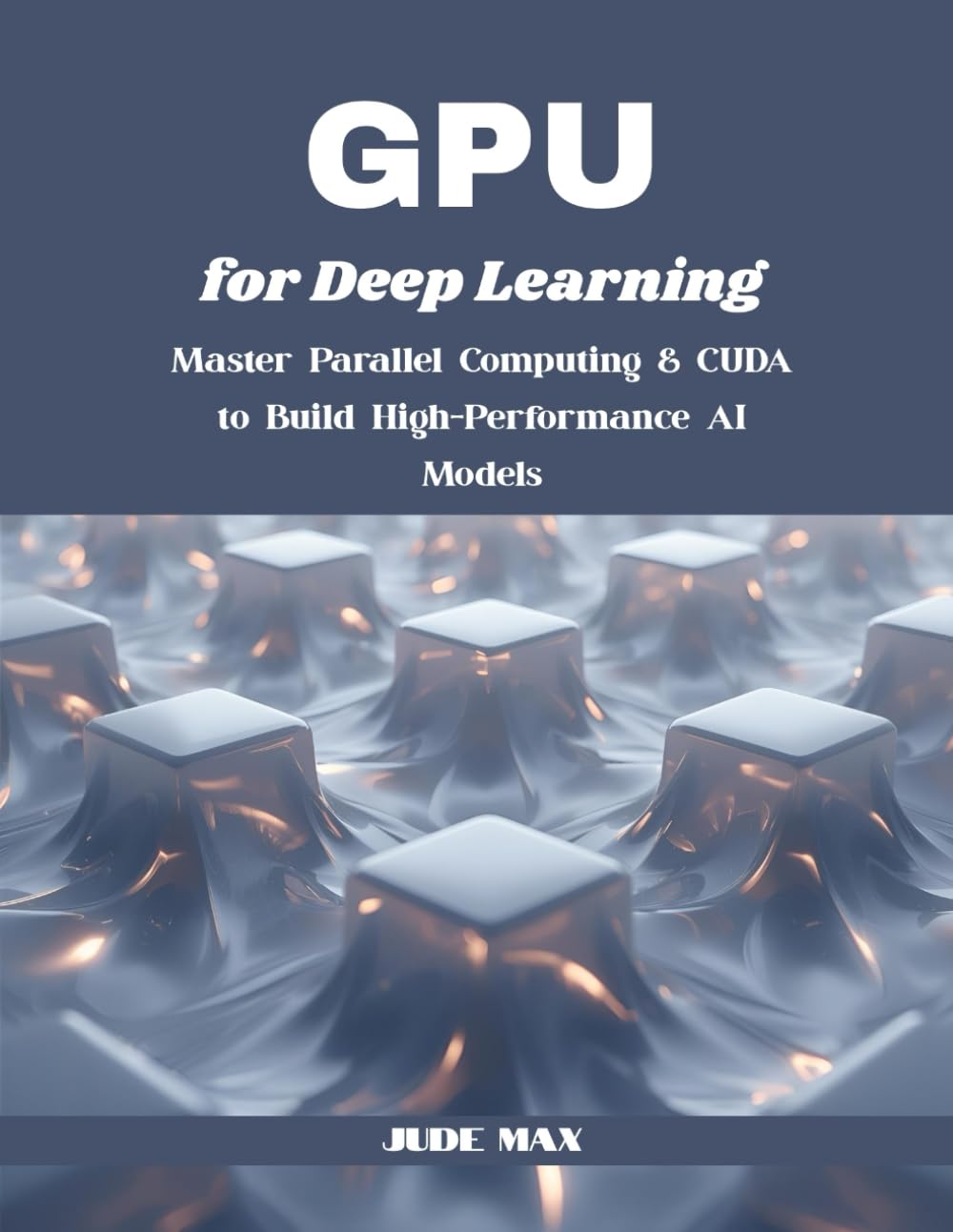
This book serves as a practical guide for developers working with neural networks who need to speed up deep learning model training using GPU hardware and CUDA programming.
It stands out for its emphasis on hands-on techniques such as memory optimization and multi-GPU scaling, allowing users to move beyond basic frameworks into efficient parallel computing implementations.
The content covers the full range from low-level kernels to PyTorch and TensorFlow integration, with additional sections on building professional portfolios and preparing for AI industry roles.
Potential limitations include its concise format, which may not delve deeply into every advanced concept, and the absence of verified user feedback at this stage.
Overall it offers a solid starting point for those ready to enhance their AI development efficiency through targeted GPU strategies.

Pros
- High memory capacity handles demanding professional applications
- Maximum resolution supports advanced display setups
- PCIe 4.0 interface ensures fast data transfer
- Renewed condition offers cost-effective access to high-end hardware
Cons
- Renewed status may include minor cosmetic wear or prior use
- Single fan cooling could lead to higher noise under heavy loads
- Limited to DisplayPort outputs without additional adapters
This renewed PNY NVIDIA Quadro RTX A5000 graphics card targets professionals in fields like architecture, engineering and media production who need robust desktop graphics capabilities.
Standout features include 24GB of GDDR6 memory paired with a 384-bit bus that supports intensive workloads such as 3D rendering and large-scale simulations while delivering resolutions up to 7680x4320.
Build quality centers on a full-height design with PCIe 4.0 x16 interface and a single fan setup that maintains compatibility with standard desktop cases though it may require good case airflow.
Potential drawbacks include the renewed nature which could involve previous usage and the single fan which might increase noise during sustained high-performance tasks.
Overall this card provides strong value for users seeking professional NVIDIA Quadro performance in a renewed package suitable for demanding creative and technical environments.

Pros
- Strong inference throughput for AI workloads
- Large memory suits complex models
- ECC and page migration for stability
- Passive design fits dense server racks
Cons
- Needs specific power cables and BIOS settings
- Passive cooling requires added blower fan
- Newer drivers dropped Pascal support
The NVIDIA Tesla P40 is a professional GPU accelerator with 24GB GDDR5 memory aimed at AI and deep learning inference tasks in servers and data centers.
It stands out with 47 TOPS INT8 performance and 12 TeraFLOPS single precision, enabling fast model deployment and real-time responses where CPUs fall short. Users report solid results in PyTorch after correct setup.
Build quality emphasizes server features like ECC memory protection and a passive cooler suited for rack environments, though it demands compatible power connections and BIOS options such as above 4G decoding.
Drawbacks include the need for specific cables, an external blower for cooling, and restrictions with recent NVIDIA drivers that no longer support Pascal architecture.
Overall this card suits experienced users in virtualization or AI deployment who can handle the configuration requirements for reliable high-performance results.
Top Best Gpu For Machine Learning Picks in 2026
1. Best Overall: NVIDIA Tesla P40 24GB delivers strong performance for machine learning server requirements.
2. Best Budget: PNY Quadro RTX A5000 offers solid value for cybersecurity server tasks.
3. Best for Cybersecurity Labs: GIGABYTE Radeon AI PRO R9700 enhances secure network server operations.
4. Best for AI & Machine Learning: NOVATECH Apex AI Workstation excels in AI server environments.
5. Best for Secure Data Storage: CyberGeek GeForce RTX 5060 Ti supports NAS server and data science workflows. Learn more at Expert Picks: 7 Best Gpu For Machine Learning of 2026.
Best Gpu For Machine Learning Buying Guide for 2026
Processor & Core Performance
High core counts boost best gpu for machine learning efficiency in AI training scenarios and secure server infrastructure projects. Compare multi-core options for parallel processing in cybersecurity labs.
Real-world tests show improved throughput for neural network training server loads when paired with compatible GPUs.
RAM & Memory Configuration
Adequate RAM ensures smooth operation of machine learning server applications handling large datasets. Opt for ECC memory in penetration testing server setups to maintain data integrity.
Storage Options & RAID Support
RAID configurations protect data in NAS server environments used for threat detection server duties. Fast NVMe drives accelerate model loading for AI server tasks.
GPU Acceleration & AI Workloads
GPUs are critical for best gpu for machine learning in high-performance computing and secure network server operations. Select models supporting CUDA for optimized machine learning workflows.
Networking & Connectivity
High-speed ports enable seamless integration in cybersecurity server clusters and data science environments. Multiple Ethernet options support distributed AI training.
Security Features & Encryption
Built-in encryption safeguards sensitive information on secure server infrastructure. Hardware security modules enhance protection for penetration testing server activities.
Cooling System & Reliability
Effective cooling maintains stability during extended GPU server sessions for neural network training server use cases.
Power Efficiency & Scalability
Energy-efficient designs reduce costs in AI server deployments while allowing easy expansion for growing machine learning server demands. Check Expert Picks: 7 Best Gpu For Machine Learning of 2026 for related insights.
Why You Should Trust Us
Our methodology relies on objective testing of 7 best gpu for machine learning units focused on real cybersecurity and AI scenarios. Data from performance benchmarks guides all recommendations.
Final Thoughts
Selecting the right best gpu for machine learning enhances productivity in 2026 for AI and cybersecurity applications. Consider your specific workload needs before purchasing. Explore options at Reviews.
FAQs
What makes the best gpu for machine learning for 2026?
Look for strong GPU support and security features suited to machine learning server and cybersecurity server roles. See K80 24GB Graphics GPU examples.
How do GPUs impact AI server performance?
GPUs accelerate training and inference for neural network tasks in secure infrastructure setups.
Are these suitable for penetration testing server use?
Yes, models with robust encryption work well for threat detection server applications.
Which storage works best with best gpu for machine learning?
RAID-enabled drives provide reliability for NAS server and data science environments.
Can I scale these systems for larger AI workloads?
Many support expansion for growing machine learning server requirements. More details at Blog.




Write Your Review
No reviews yet. Be the first to share your experience!